

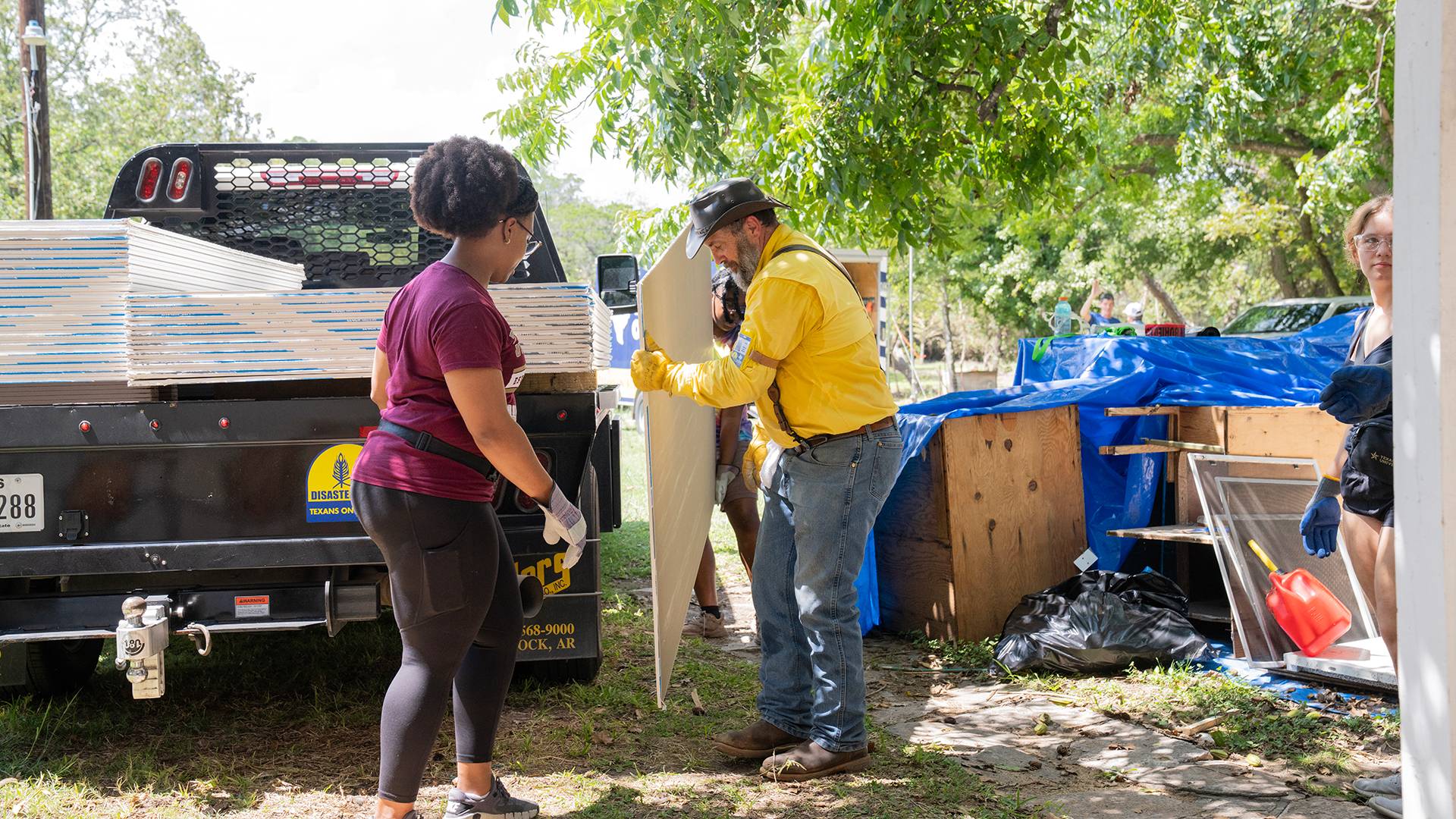
Texas State University’s Translational Health Research Center (THRC) has been awarded national grant funding through the Health and Extreme Weather Research Award Program, administered by the Natural Hazards Center, to examine how disaster recovery efforts affect the emotional and mental health of volunteers in Central Texas.
The project centers on volunteers participating in organized frontline work following the July 2025 Guadalupe River flooding in Kerr, Travis, Burnett and Williamson Counties—a rare and devastating event that caused widespread destruction, claimed more than 130 lives and mobilized a region-wide response that remains ongoing. Engagement efforts will focus on established organizations and volunteer fire departments providing requested support in search and rescue, family assistance and reunification, damage assessment and recovery efforts.
While volunteers play a critical role in saving lives and helping communities recover after disasters, little research has examined the emotional toll this work can take on those who step forward in times of crisis.

“Volunteers are essential to disaster recovery, especially in rural and disaster-prone areas,” said Elizabeth Ekren, Ph.D., principal investigator and THRC researcher.
“Their work can be emotionally demanding, but it can also foster deep, local connection and personal growth. By hearing directly from volunteers, we can strengthen future preparedness and better support the people and organizations who give so much to help their communities.”
By gathering volunteers’ stories and personal experiences, the research team will explore how they make meaning of their work, navigate emotional challenges, and build resilience over time. Findings from the study will inform practical strategies that preparedness and response organizations can use to better support volunteers before, during and after disaster response.
The project leverages THRC’s research and community partners, bringing together an interdisciplinary team of THRC researchers, THRC faculty fellows from TXST’s School of Social Work, and the University of Texas San Antonio School of Nursing. The work also relies on strong community partnerships with Texas Search and Rescue (TEXSAR) and Hill Country Mental Health and Developmental Disabilities Centers to ensure the research remains locally informed and responsive to community needs.
“Our organization is proud to support the Translational Health Research Center at Texas State University,” said Justin McInnis, president and CEO of TEXSAR. “Research is key to preparing for the future. TEXSAR recognizes the value of research that advances preparedness and resilience in the face of extreme conditions. Efforts like those led by THRC help inform the future of emergency response.”
Learn more about the research project here.