Those times the U.S. military tried to shoot down the planet Venus
Venus has sparked centuries of confusion—from Napoleon-era crowds to WWII defenses. TXST astronomer Donald Olson uncovers these cases in Sky & Telescope (May 2026).
April 10, 2026
Jayme Blaschke
Venus has sparked centuries of confusion—from Napoleon-era crowds to WWII defenses. TXST astronomer Donald Olson uncovers these cases in Sky & Telescope (May 2026).
In July 1945, the U.S. Army Air Forces scrambled fighter planes to intercept and shoot down a mysterious object hovering over Los Alamos, New Mexico, where the Manhattan Project was racing to perfect the atomic bomb in the closing days of World War II.
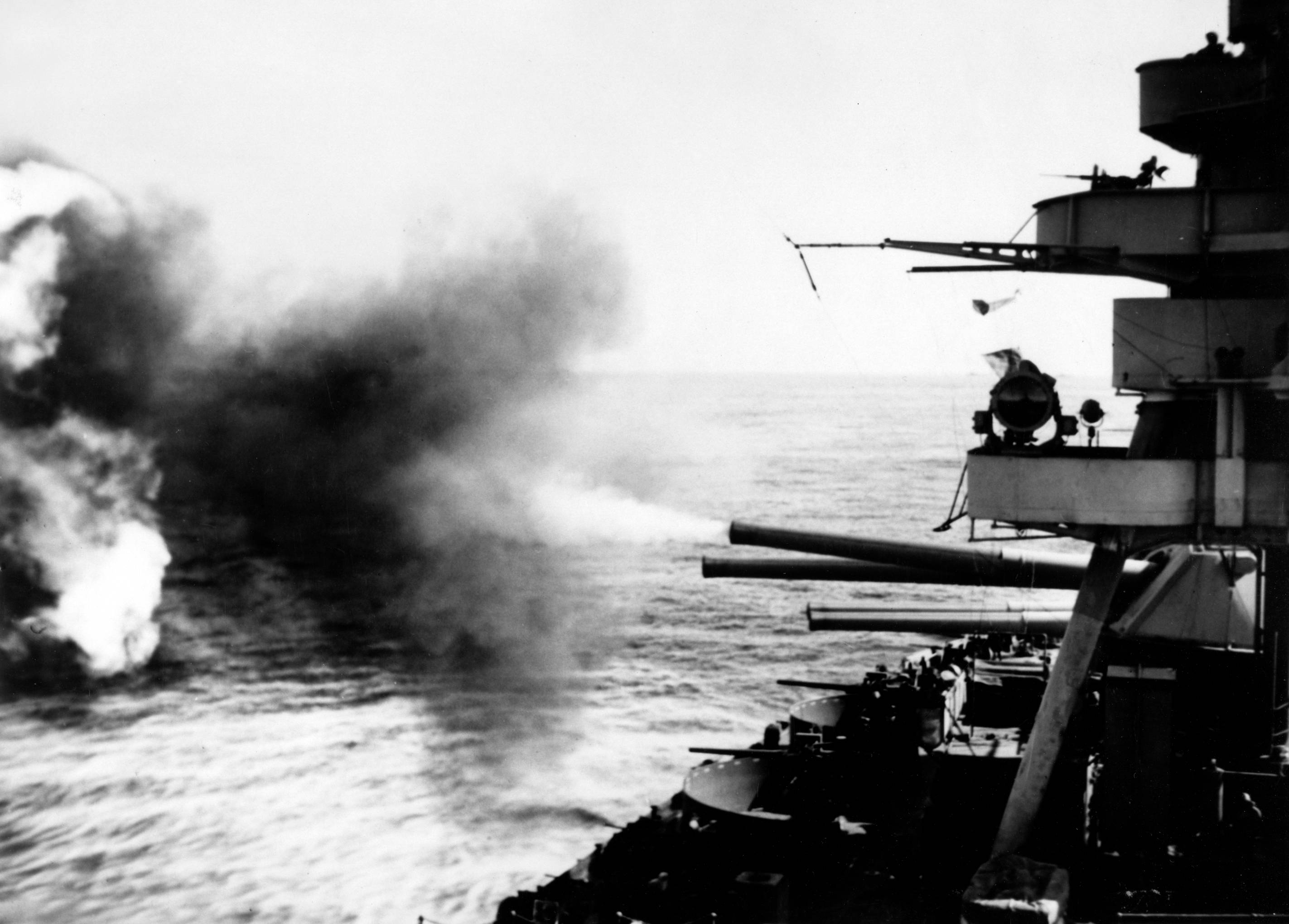
Los Alamos wasn’t an isolated incident. Earlier that year, the battleship U.S.S. New York, en route to participate in the invasion of Iwo Jima in the Pacific Ocean, opened fire on a possible Japanese “secret weapon” stalking the American ship in the sky above.
U.S. Navy photograph, Wikimedia. Public Domain.
U.S.S. New York firing her 14-inch guns during the bombardment of Iwo Jima on February 16, 1945.
Neither the fighter planes nor the battleship succeeded in shooting down the target, for in both cases it proved to be the planet Venus, shining unusually bright in the daytime sky. Few stellar objects have caused as much drama and excitement throughout history as the second planet from the sun. Venus is at its greatest visibility during periods near greatest elongation—that is, when the planet appears farthest from the sun and is not hidden by its glare. For 2026, Venus will reach its greatest elongation on Aug. 15 and be at or near peak brightness Sept. 14-26, greatly increasing the potential for misidentification.
In light of this, Texas State University astronomer, physics professor emeritus and Texas State University System Regents' Professor Donald Olson has applied his distinctive brand of celestial sleuthing to track down fascinating events throughout history where the misidentified planet provoked unexpected reactions. Olson’s findings are published in the May 2026 issue of Sky & Telescope magazine, on newsstands now.
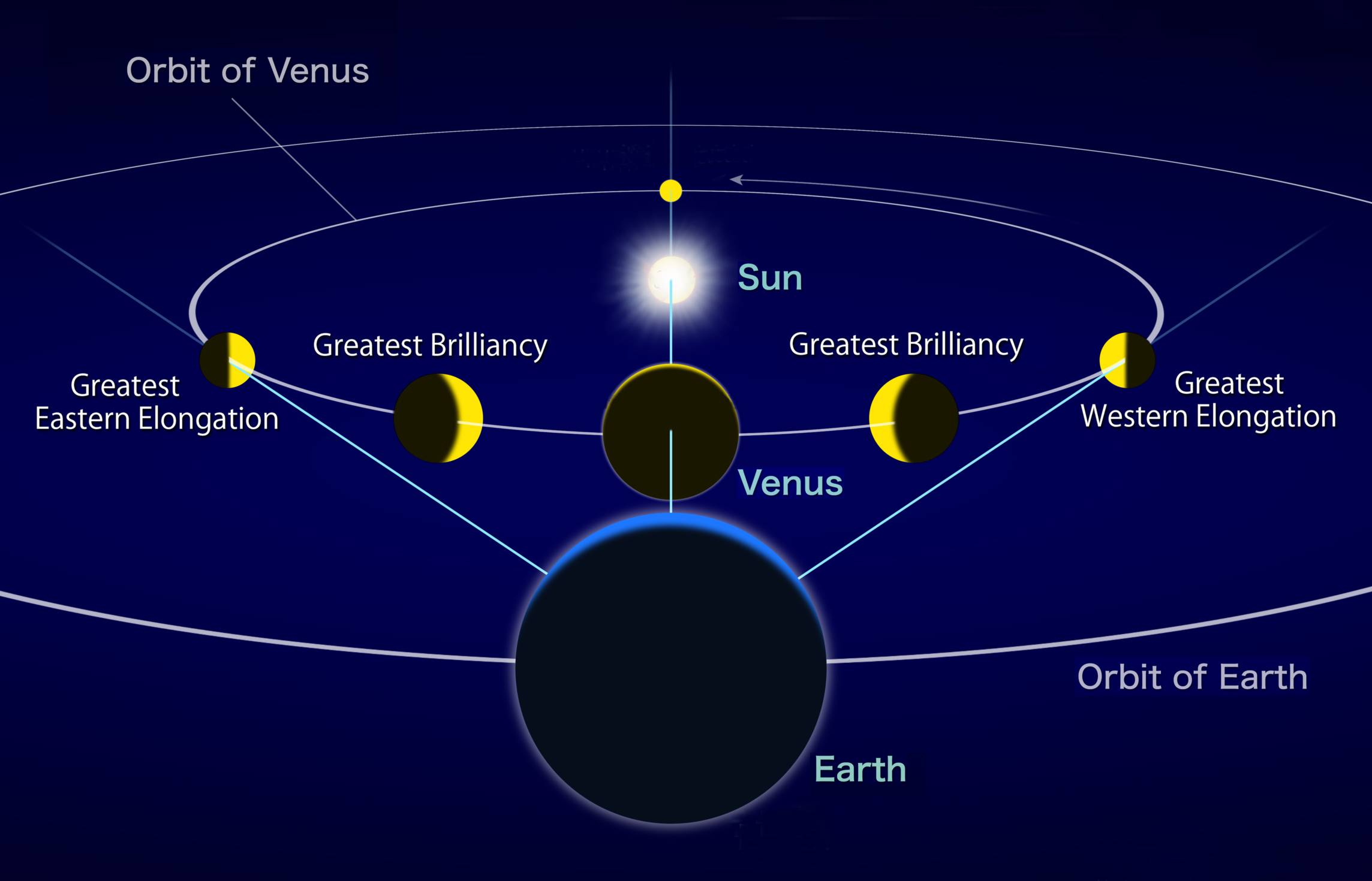
Courtesy of the National Astronomical Observatory of Japan.
Venus is easiest to see when it’s far from the Sun in the sky; this angle is called elongation. The U.S.S. New York incident occurred when Venus was between greatest eastern elongation and greatest brilliancy (left side). The Manhattan Project incident occurred just above greatest western elongation (right side).
Political Cameos
Venus made an unexpected appearance during the day of Abraham Lincoln’s second inaugural address on March 4, 1865. Following the president’s speech in Washington, D.C., spectators were distracted by a bright star in the southern sky around 1 p.m. Crowds were fascinated by the unusual star appearing in daylight hours, although one of Lincoln’s bodyguards, Sergeant Smith Stimmel, correctly identified it as Venus. A rainstorm that morning, prior to Lincoln’s inauguration, had cleared the air of dust and other pollutants, leaving the sky particularly clear.
A half-century earlier, Venus put in an appearance following one of Napoleon Bonaparte’s great military victories. On Dec. 10, 1797, Napoleon made his way through crowds lining the streets of Paris in celebration of his victorious Italian campaigns. As Napoleon’s party approached the Luxembourg Palace, the crowds grew excited by a bright star shining above his destination, which they took as a supernatural sign celebrating France’s victories over enemy nations. Napoleon, for his part, did nothing to dissuade the crowds of this notion.
Abraham Lincoln’s second inaugural address on March 4, 1865.
World War II
For the U.S.S. New York, tensions were already elevated before Venus made an appearance. Steaming from Saipan to join the U.S. Pacific fleet for a pre-invasion bombardment of Iwo Jima, sailors spotted what appeared to be a luminous metallic balloon trailing the battleship. Immediately, the crew concluded that it must be a Japanese secret weapon. The captain was concerned enough that he ordered the ship’s anti-aircraft batteries to open fire, as related in the pages of the New Yorker magazine after the war:
The twenty-millimeters sounded like popguns, and the tracers faded into the sky, very short. The gunnery officer switched to the forty-millimeters, and they were short, too. The Marine sergeant shouted, 'Bring them more to the left!' The captain yelled, 'Goddam it, guns, you're short! Open it up, open it up!' The gunnery officer switched to the three-inch dual-purposes and opened the range to fifteen thousand yards. Still too short. We signaled to the destroyer alongside and it tried its five-inch guns. Still no dice .…
Not until the navigator came on deck and asked why they were shooting at Venus did the captain and crew realize their embarrassing error. But it was an error repeated just a few months later in New Mexico.
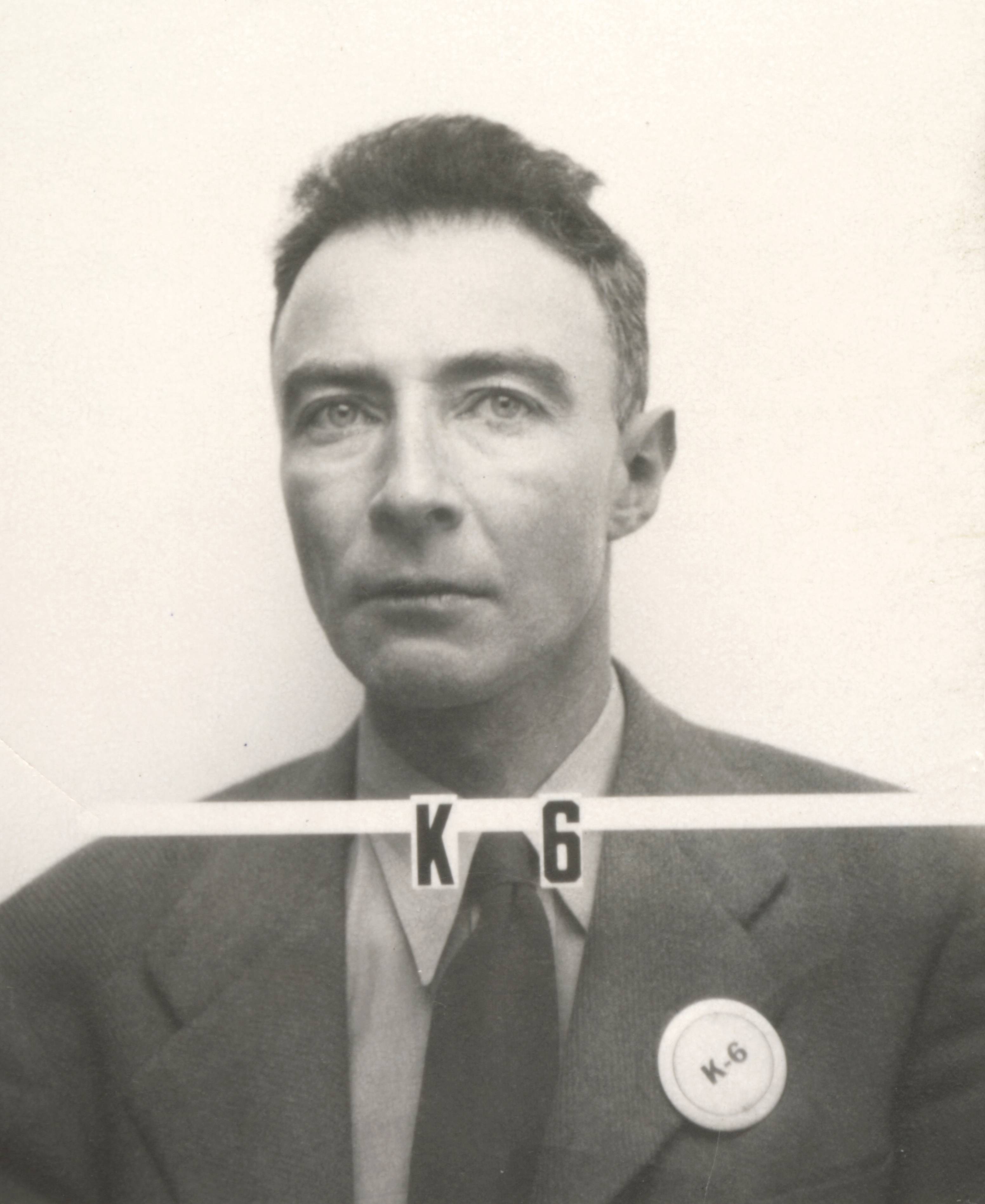
The Berkeley physicist J. Robert Oppenheimer, the director of the Los Alamos operations of the Manhattan Project.
In 1950, at the height of breathless news reports of “flying saucer” sightings across the country, Eleanor Roosevelt, widow of the late President Franklin D. Roosevelt, wrote to Robert Oppenheimer, who oversaw the Manhattan Project, to ask his opinion whether flying saucers originated from alien worlds. Oppenheimer, skeptical of UFO reports, shared with the former First Lady an event that happened shortly before the Trinity nuclear test in July 1945.
One morning, a bright, shining object in the sky commanded the attention of the Los Alamos staff—composed of some of the greatest scientific minds on the planet. The growing tension at the base as the Trinity Test approached had everyone on edge, and the mysterious object was viewed with alarm as a potential threat.
Los Alamos officials went so far as to call nearby Kirtland Field and request the U.S. Army Air Forces scramble fighter planes to intercept the shining threat. Oppenheimer then writes:
Our director of personnel was an astronomer and a man of some human wisdom; and he finally came to my office and asked whether we would stop trying to shoot down Venus.
Wikimedia, shared under CCA 4.0.
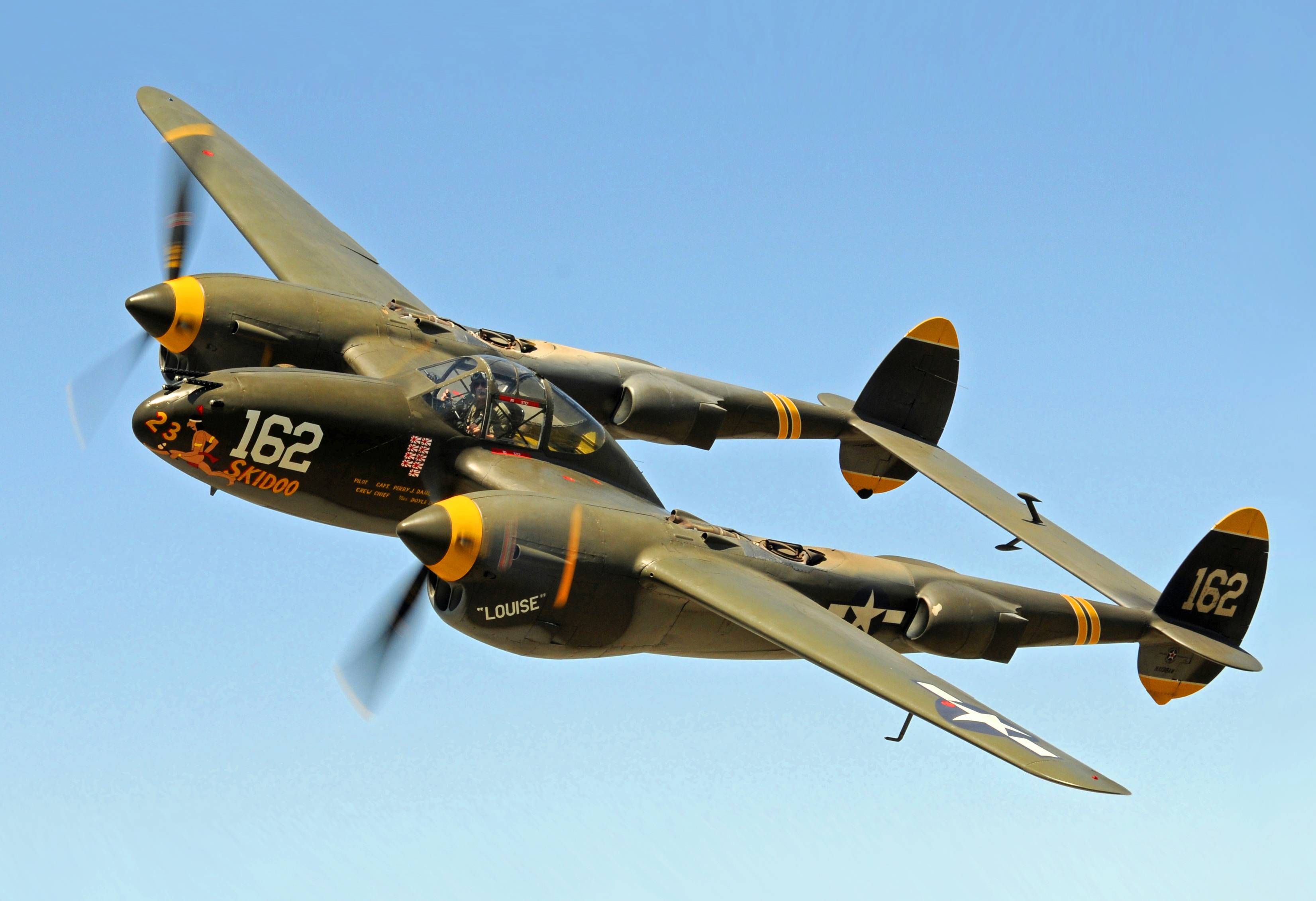
The fast interceptors at New Mexico’s Kirtland Field, the closest USAAF base to the site of the Manhattan Project, were unable to fly high enough to shoot down the mysterious object – the planet Venus.
Olson is the author of four books in the Celestial Sleuth series, including Celestial Sleuth: Using Astronomy to Solve Mysteries in Art, History and Literature; Further Adventures of the Celestial Sleuth: Using Astronomy to Solve More Mysteries in Art, History and Literature; Investigating Art, History and Literature with Astronomy: Determining Time, Place and Other Hidden Details Linked to the Stars; and Celestial Sleuthing: More Mysteries in Art, History and Literature, published by Springer Praxis Books.