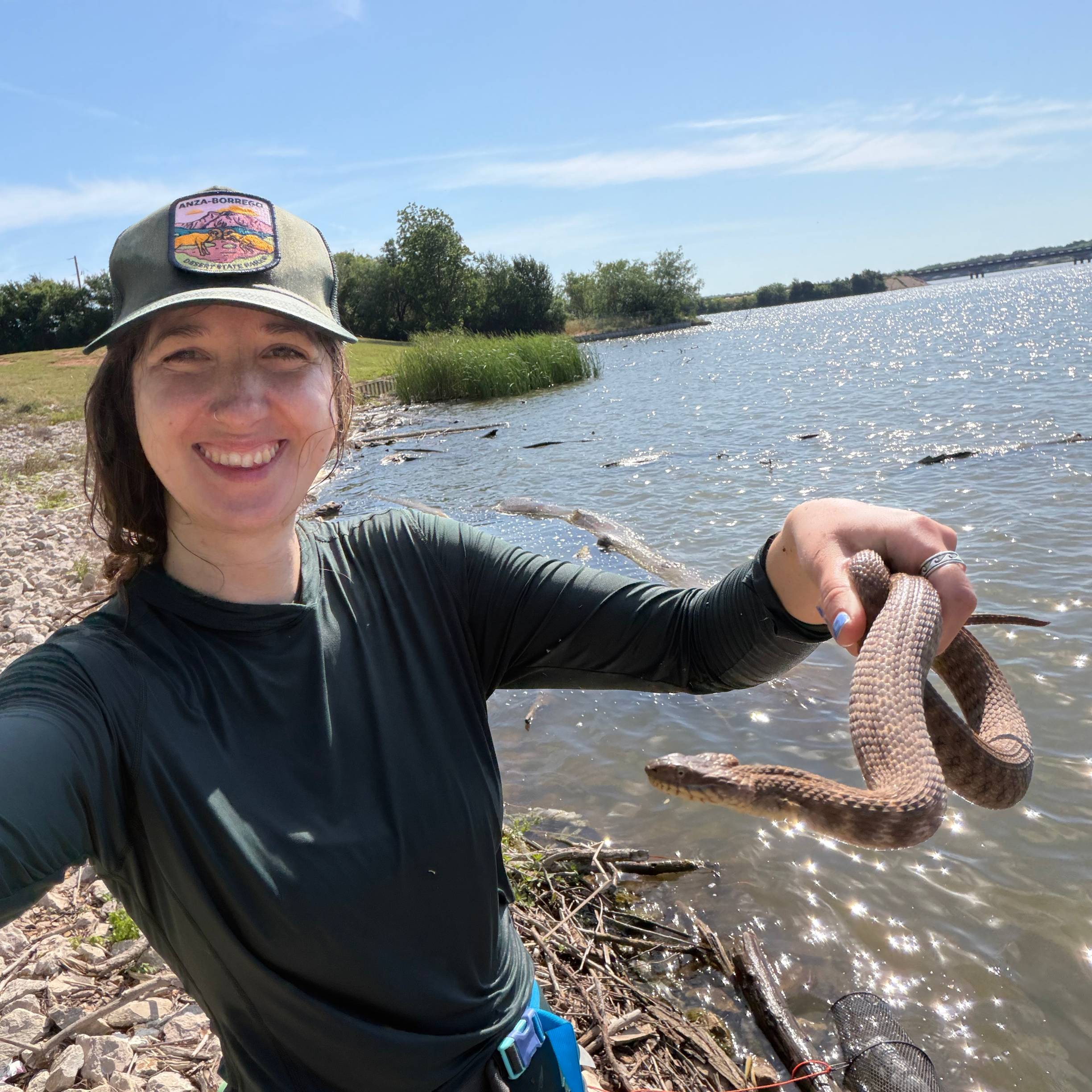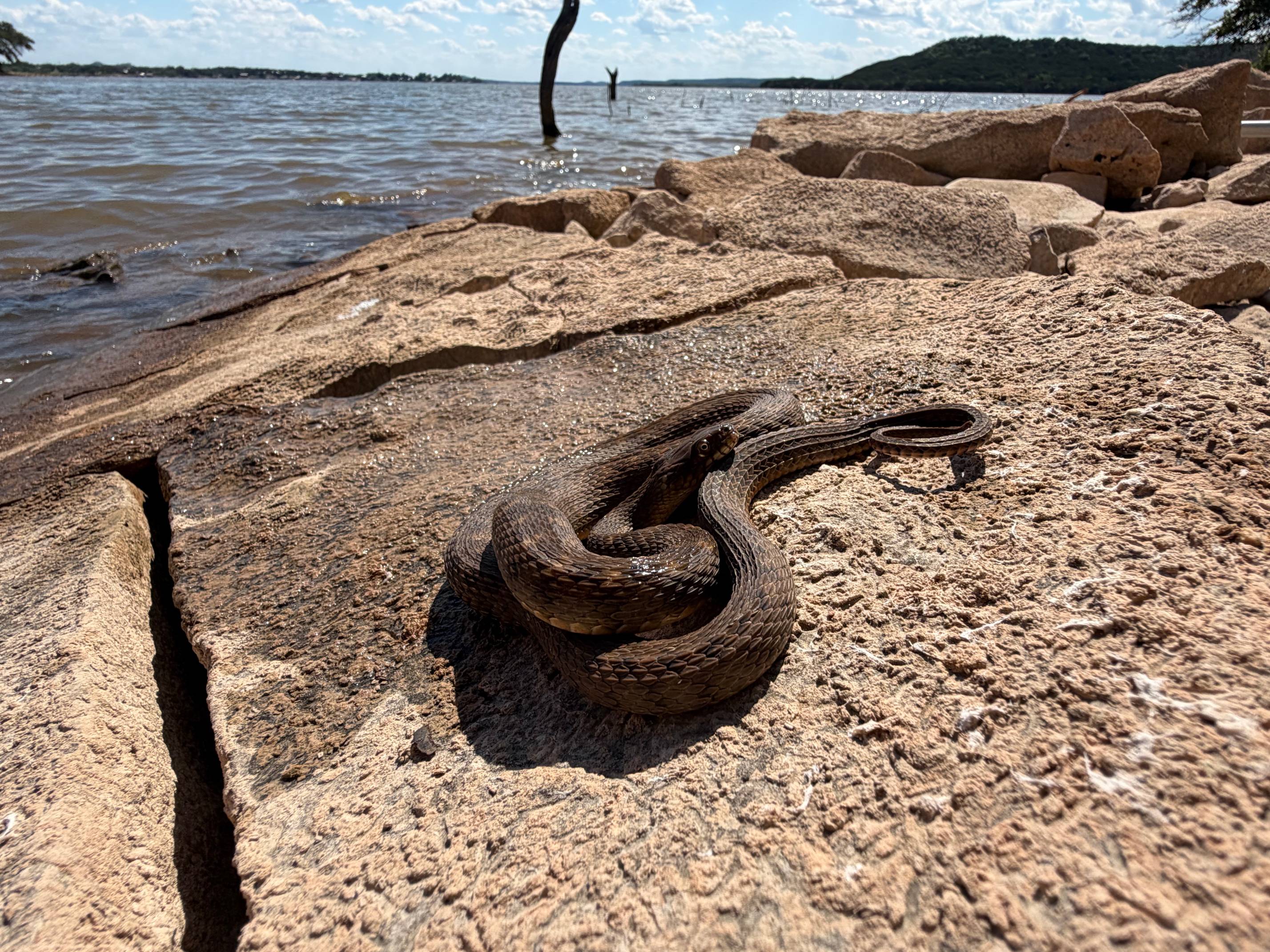

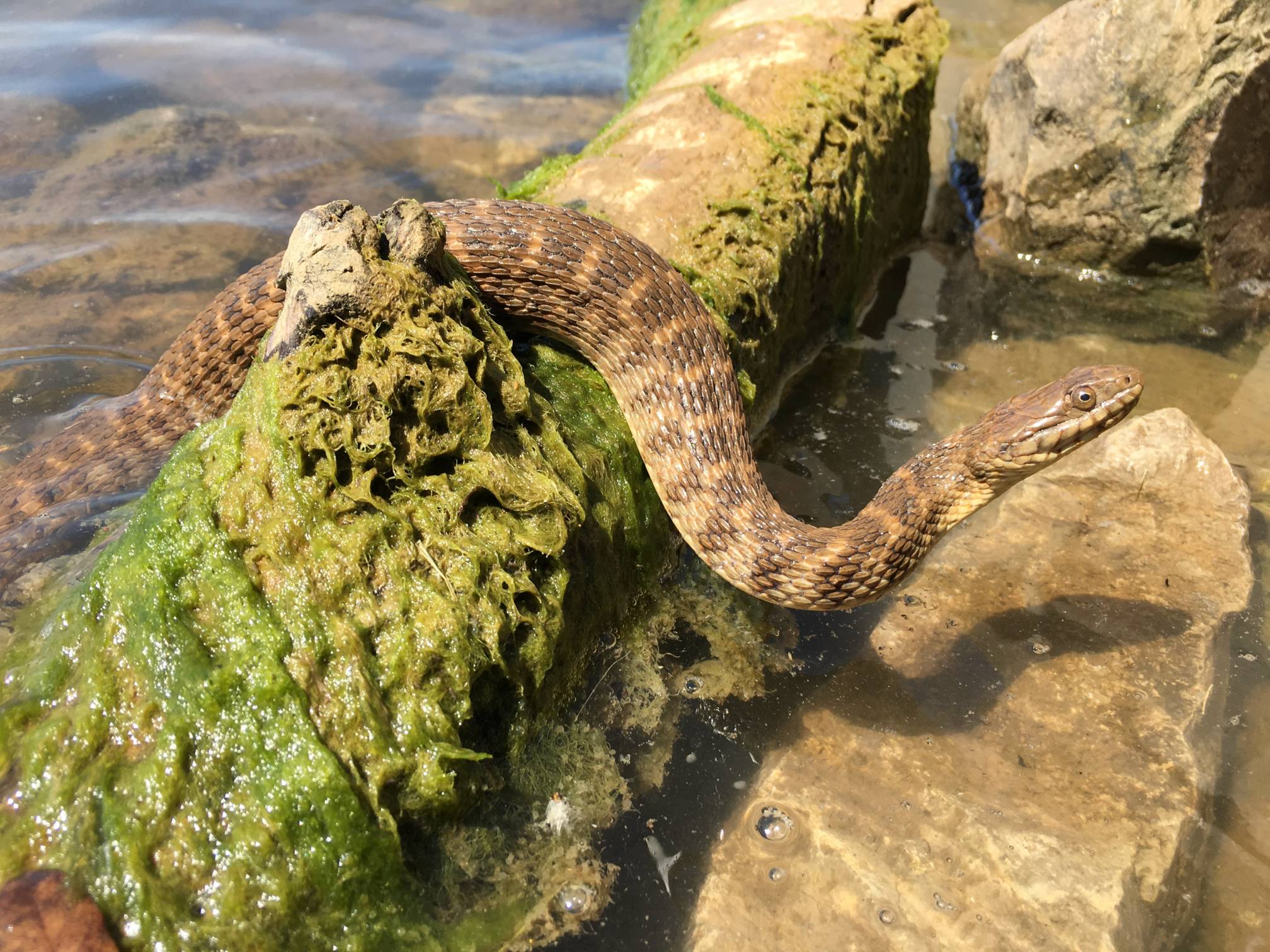
The Brazos water snake is found in only a small part of Texas, where changes to rivers, reservoirs, and shorelines can affect much of the species’ habitat. Its habitat is shrinking and becoming fragmented into smaller, disconnected areas. Drought, declining populations, local population losses, and disease intensify the pressure.

David Rodriguez, Ph.D., professor of biology at Texas State University, is leading a conservation effort to establish a breeding program for Brazos water snakes and ultimately release them into suitable habitats, with support from a Texas Parks and Wildlife Department grant.
The project builds on nearly two decades of research by Rodriguez, TXST students, technicians, postdoctoral researchers, faculty members, and conservation partners. Since 2006, they have documented the snake’s populations, habitat, genetics, and disease and created the foundation needed to design and test the conservation effort. Their research has also shown that populations in different locations have genetic differences, so losing one local population could mean losing part of the species’ genetic diversity.
“Receiving this support is especially meaningful because it allows us to move from documenting declines and disease to testing a direct conservation response,” Rodriguez said. “This grant gives us the opportunity to turn that knowledge into action in partnership with the Houston Zoo and the Texas Parks and Wildlife Department.”
The project aims to strengthen existing populations, restore populations where they have declined, and improve the species’ long-term survival chances.