

Texas State University researchers have identified a previously unknown mechanism that helps cells repair DNA precisely through a process called SUMOylation. The discovery could deepen understanding of genome stability and cancer-related processes.
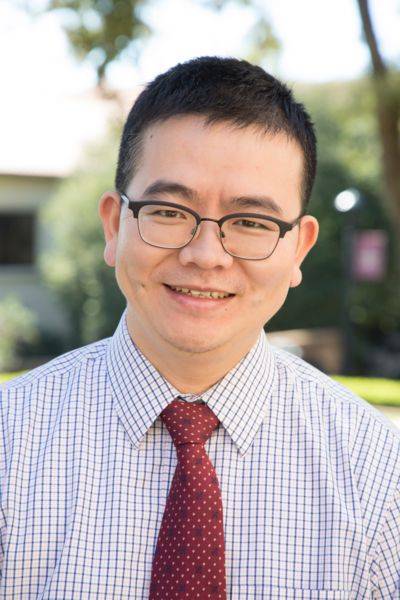
Xiaoyu Xue, Ph.D., associate professor of chemistry and biochemistry at TXST, and Jiayi Fan, Ph.D., research associate at Memorial Sloan Kettering Cancer Center, led the study, “Multi-subunit collaboration enables Smc5/6 to function as a composite SUMO E3 complex,” which was published in Nature Communications.
Cells use specialized repair systems to protect the genome, their complete set of genetic material. The study found that the Smc5/6 protein complex helps attach a small tag called SUMO to proteins involved in DNA repair, helping cells maintain genome stability.
The team discovered that Smc5/6 becomes active when it encounters double-stranded DNA and DNA structures that look like repair sites. Smc5/6 acts like a repair crew: several parts of the complex grab onto the DNA, while ATP (the molecule cells use as an energy source) helps move the complex into the right position. That positioning supports SUMOylation, which adds small SUMO protein tags to other proteins and helps direct and control the cell’s DNA repair work.
These findings indicate that Smc5/6 is not just a general protein complex. Rather, it is highly specialized to respond to DNA damage, bind to DNA damage repair intermediate structures, and facilitate SUMOylating proteins efficiently and exactly when and where they are needed.
This fundamental knowledge could help scientists better understand genome instability; errors in DNA repair can lead to unstable genetic material, which is closely linked to disease and cancer.
"Our research lays out a foundation for future research to gain more insights into how Smc5/6 enables SUMOylation at specific times and locations upon unique substrates to maximize genome maintenance," Xue said. "The model emerging from our study in budding yeast will support future research in DNA damage repair and cancer research in humans."
The project included TXST students and former students, alongside collaborators from the Memorial Sloan Kettering Cancer Center. It was supported by an NIH Research Enhancement Award, the National Institute of General Medical Sciences-funded project “Mechanism of Smc5/6-mediated protein SUMOylation in DNA repair,” as well as startup and Research Enhancement Program (REP) funds from TXST. Xue and Xiaolan Zhao, Ph.D., laboratory head of the Molecular Biology Program at Memorial Sloan Kettering Cancer Center, are the corresponding authors of the study.
Moving forward, the team will investigate how Smc5/6 modifies other DNA repair proteins, how the Nse5/6 subcomplex affects that activity, and whether this biological mechanism can be extended from yeast to humans.