
TXST’s first-ever satellite launches into space

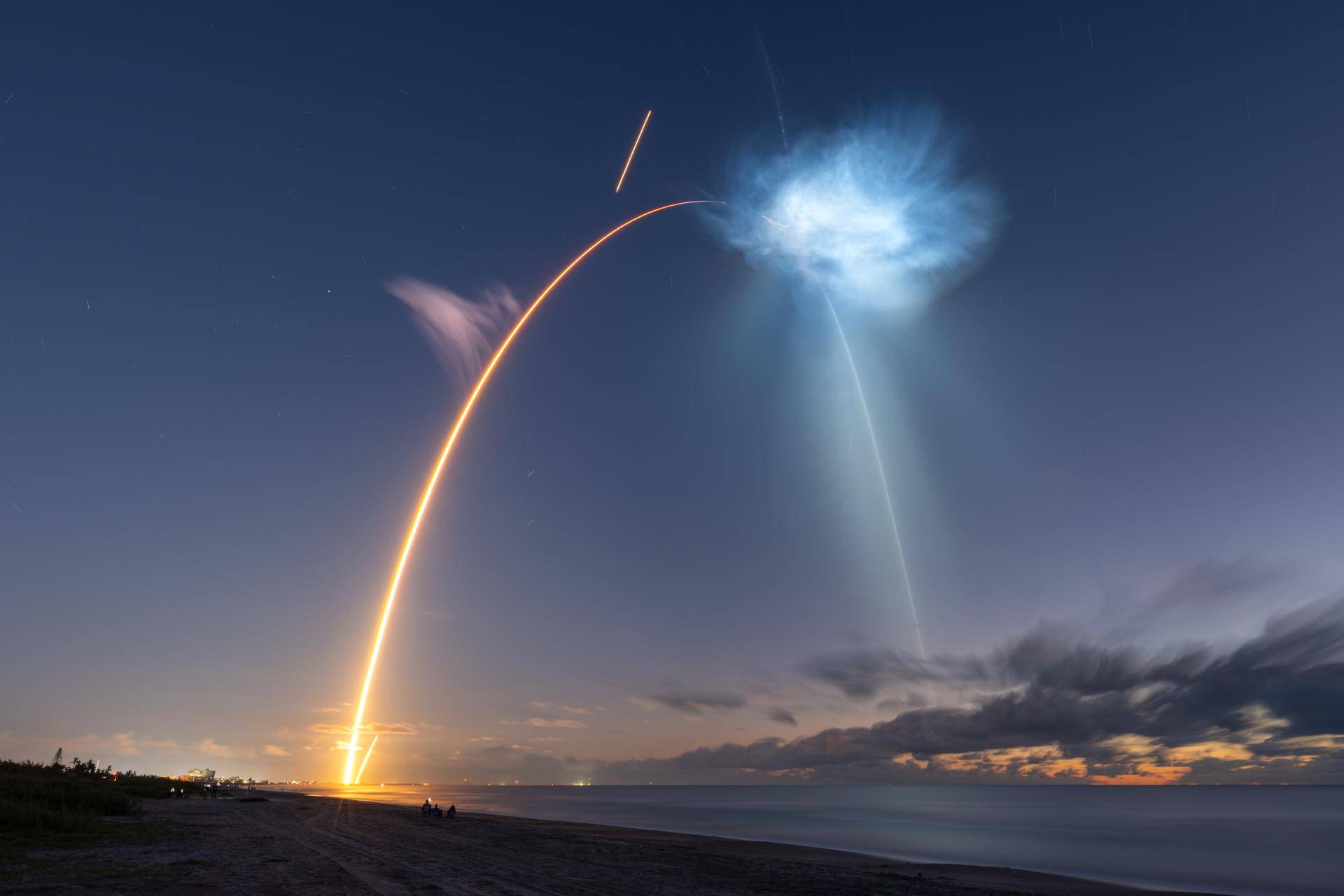
Blue sky long exposure photograph with an orange line leading to a cloud of blue.

Texas State University has launched PROVES-Maia, its first university-owned satellite, creating new opportunities for student learning and research in space.

Texas State University made history on October 13 with the launch of PROVES-Maia, the first satellite owned and operated by TXST to travel to space. Maia launched aboard a SpaceX Falcon 9 as part of NASA’s CRS-35 mission to the International Space Station.

The milestone builds on years of work by the TXST Space Lab to help other universities prepare satellites for orbit. Students and researchers in the TXST Space Lab built and tested Maia and will command it once it reaches orbit. The mission puts the team’s spacecraft assembly, flight software, and ground communication systems aboard a TXST satellite for the first time.
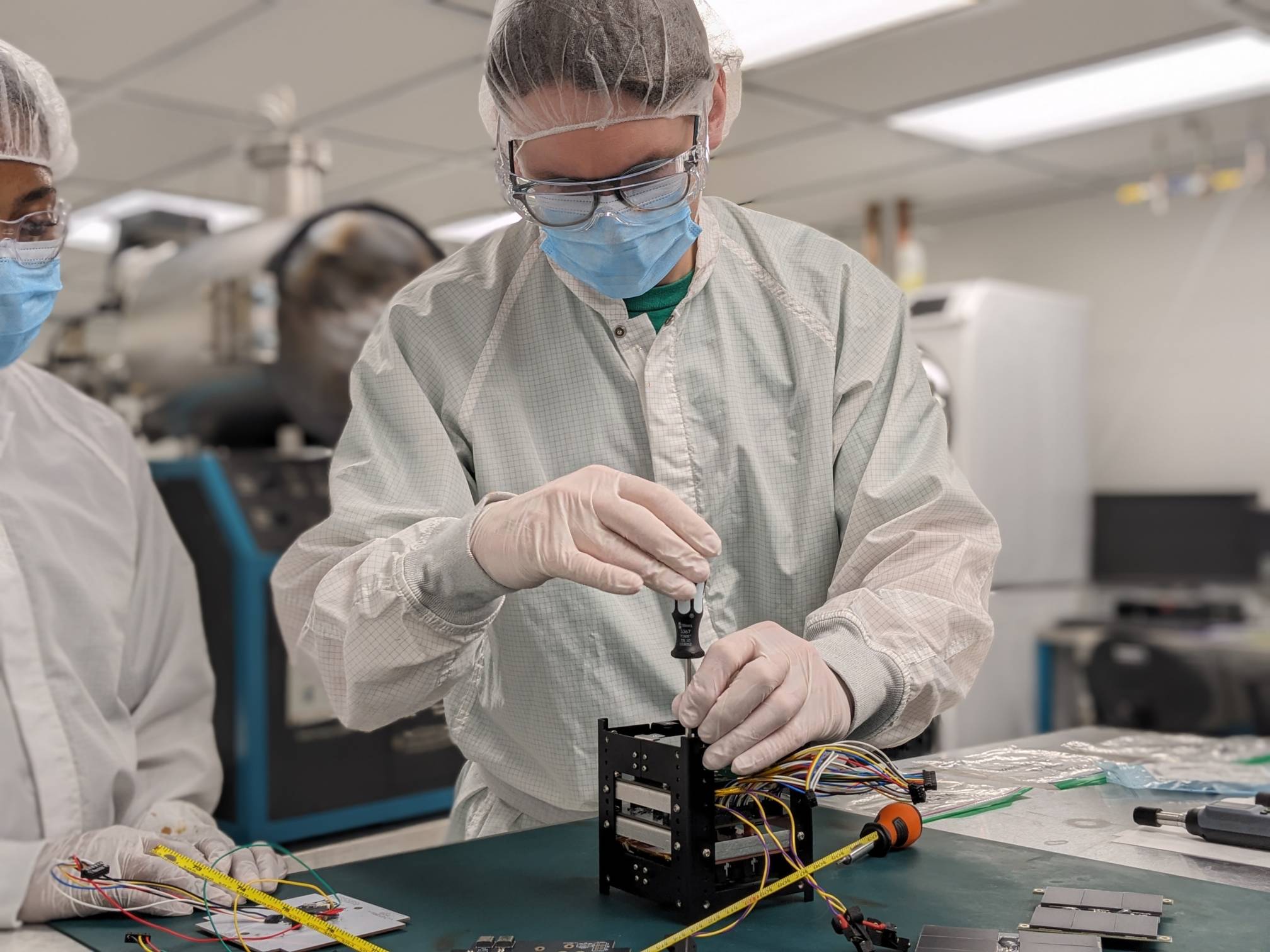
man in white lab coat uses screwdriver on a black cube box
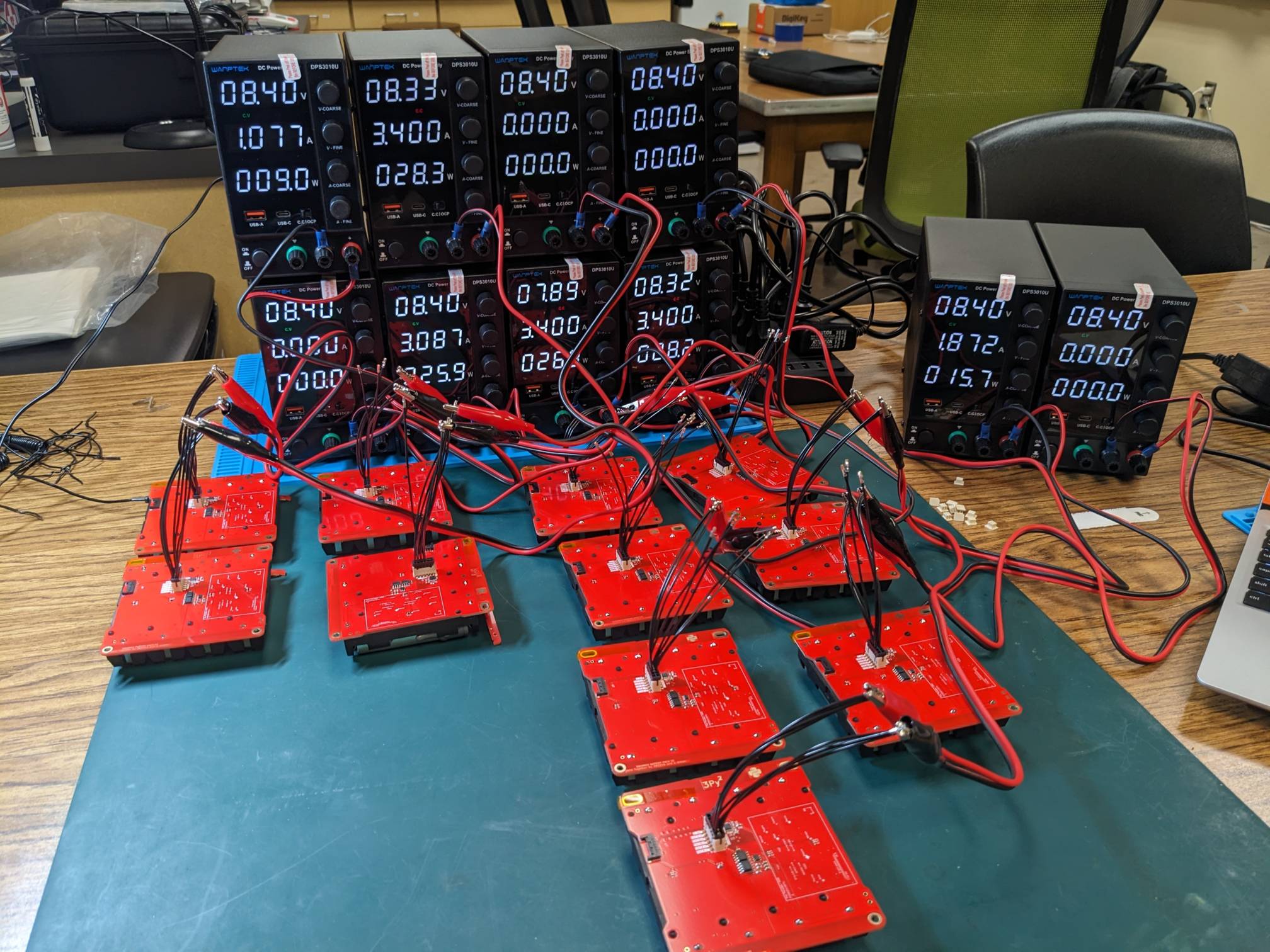
Multiple red circuit boards connected by wires to digital power supplies on a laboratory workbench.
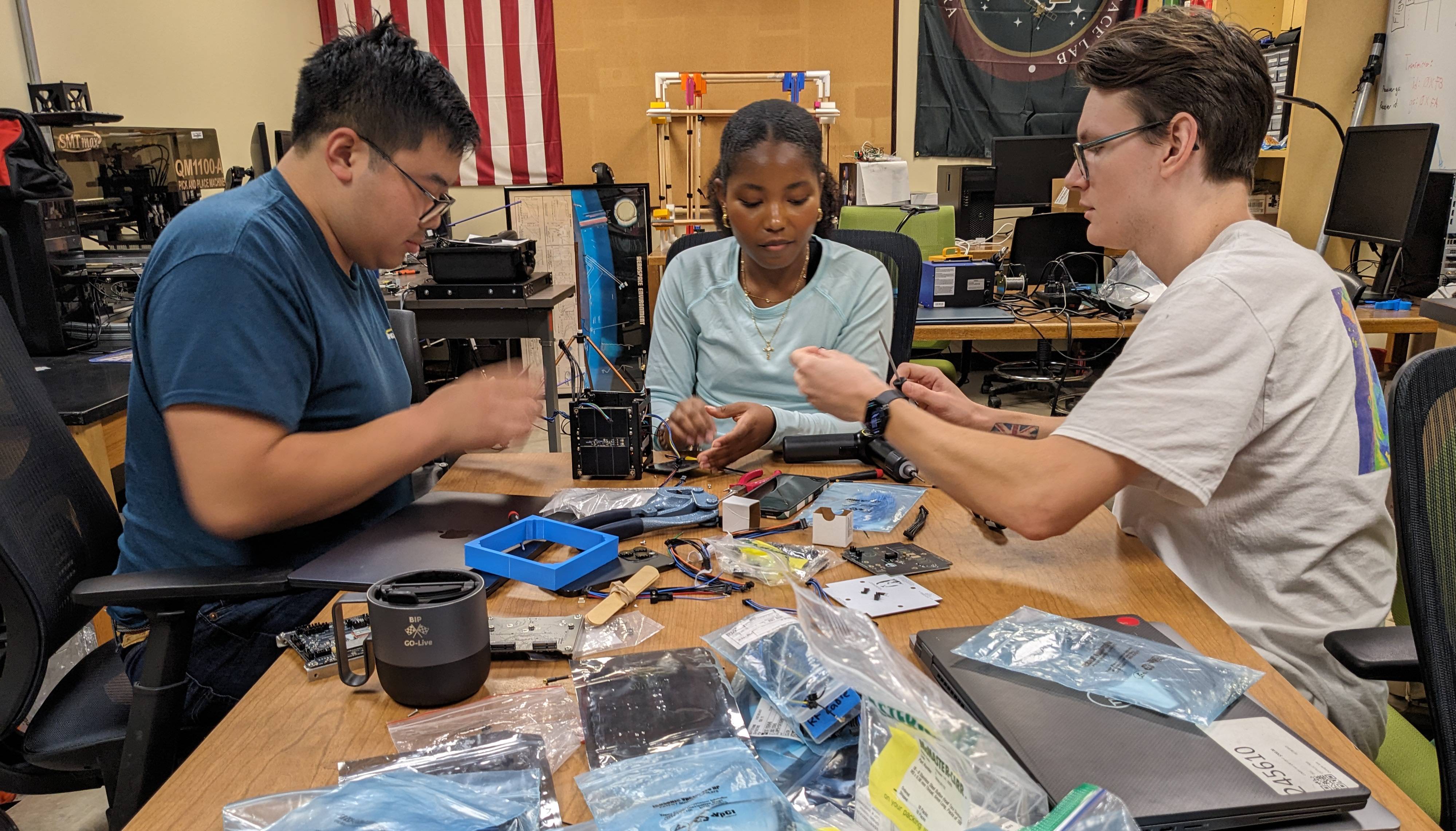
multiple students working on electronic in lab setting
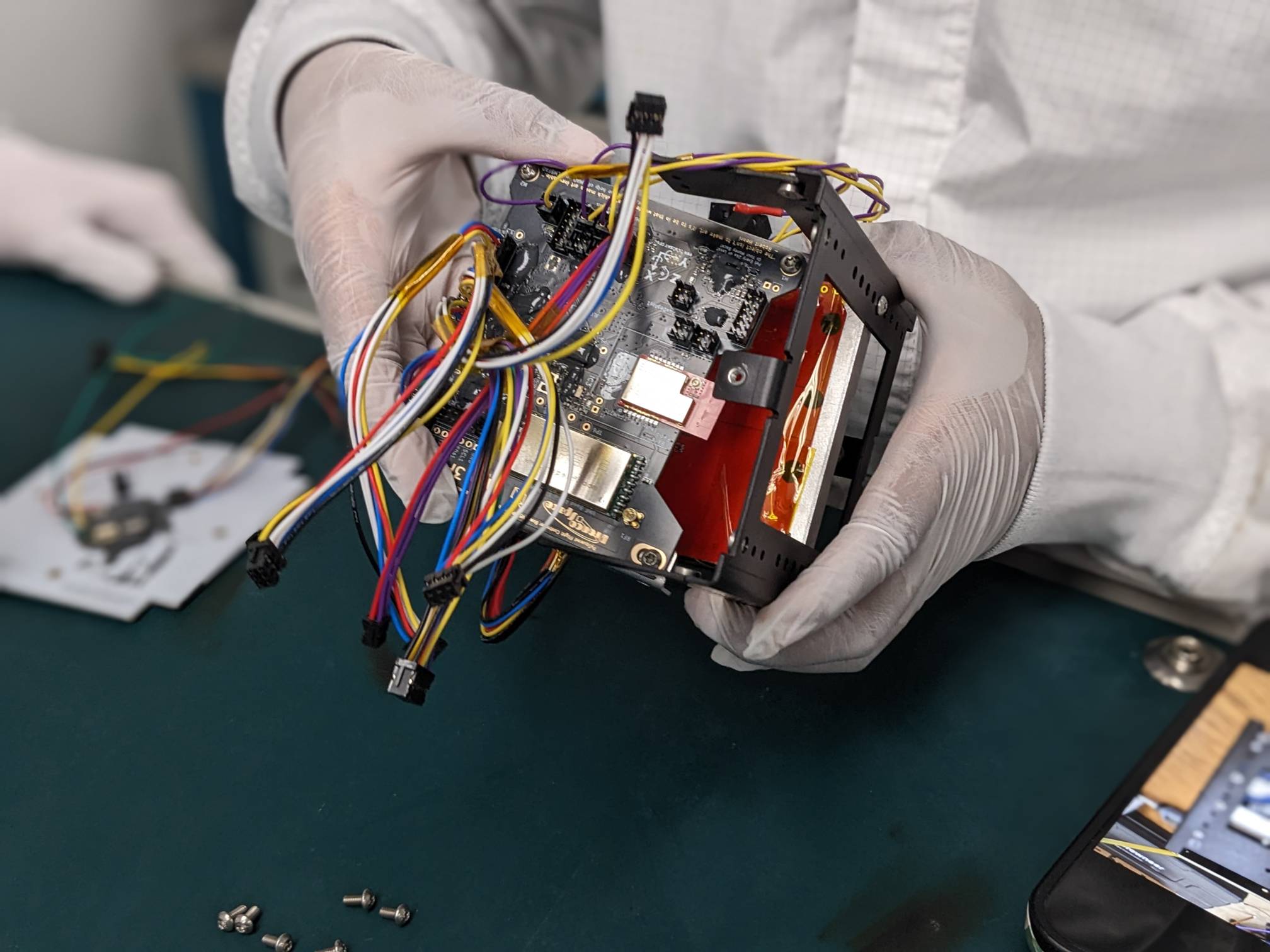
Gloved hands hold an electronic device with exposed circuit boards and multicolored wiring.

“This launch is a testament to what Bobcats can do when we come together and tackle something as complex as satellite design and operations,” said Evan Jellison, assistant professor of instruction in the Department of Physics and TXST Space Lab coordinator.

“The mission wouldn’t be possible without the diversity of skills and expertise students brought to the project. Maia is also a stepping stone for TXST. Once we finish this mission, what’s stopping us from doing another?”

The student team includes Nate Gay, software lead and mathematics student; Saidi Adams, an electrical engineering student on the software team; Jasmine Rawles, a mechanical engineering student and engineer; and Johnny McCaskill, a mathematics, physics, and computer science student who works in engineering and mission modeling. Physics alumnus Chase Blount also serves as an engineer. Many other TXST students contributed to Maia’s development, testing, and launch preparation.  

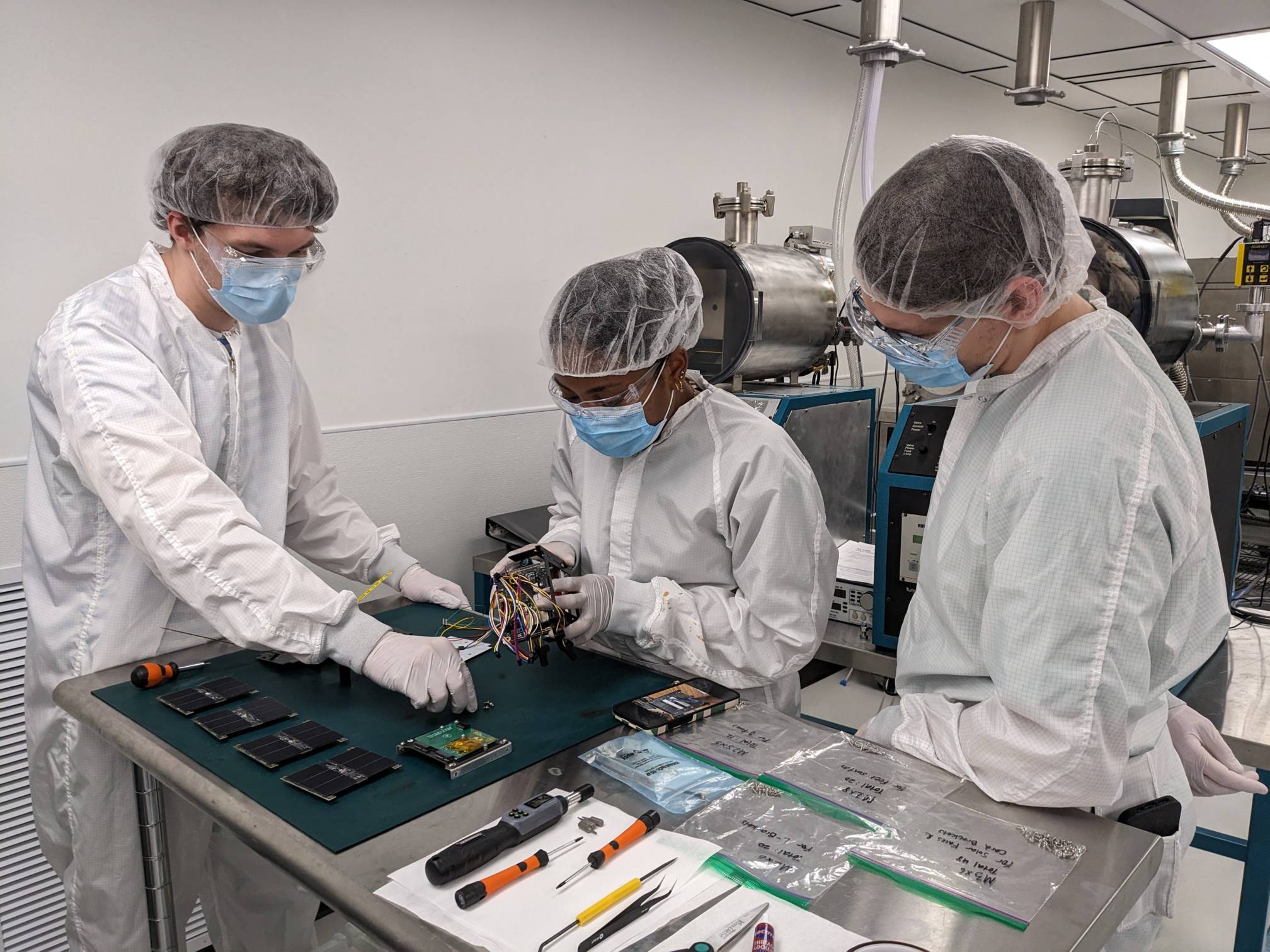
three people posing with small black box

Maia carries MOSAIC, a TXST-developed system that allows students to test different instruments and spacecraft components. MOSAIC includes a TXST-designed radiation sensor that will measure radiation in low Earth orbit.  

After reaching the International Space Station, Maia will remain there until it is sent into solo orbit around the Earth. The TXST team will then make contact with the satellite and begin the mission.  

The successful launch of Maia also opens new opportunities for future research. The Space Lab aims to help TXST researchers and regional partners test new technologies and conduct experiments in space.  

“Maia is the first time TXST has run a mission of its own. Our students build it, test it, and then command it from our own ground station once it’s in orbit,” said Blagoy Rangelov, Ph.D., associate professor in the Department of Physics and principal investigator of the TXST Space Lab. “Once a university can do that, an idea sketched on a whiteboard in San Marcos has a real path to orbit.”  


About the TXST Space Lab  

Founded in 2023, the TXST Space Lab is a research lab in the Department of Physics that designs, builds, tests, and operates spacecraft. Lab-developed flight software and spacecraft assembly work currently support satellites in orbit through the PROVES Five collaboration, and the lab runs its own ground command station in San Marcos for satellite communications. Students from physics, engineering, and computer science work alongside faculty across the full mission lifecycle — from circuit boards and flight code to launch-day operations — and the lab partners with universities, agencies, and industry to fly research payloads in low Earth orbit. 

For more information, contact:

TXST Office of Media Relations, 512-245-2180