

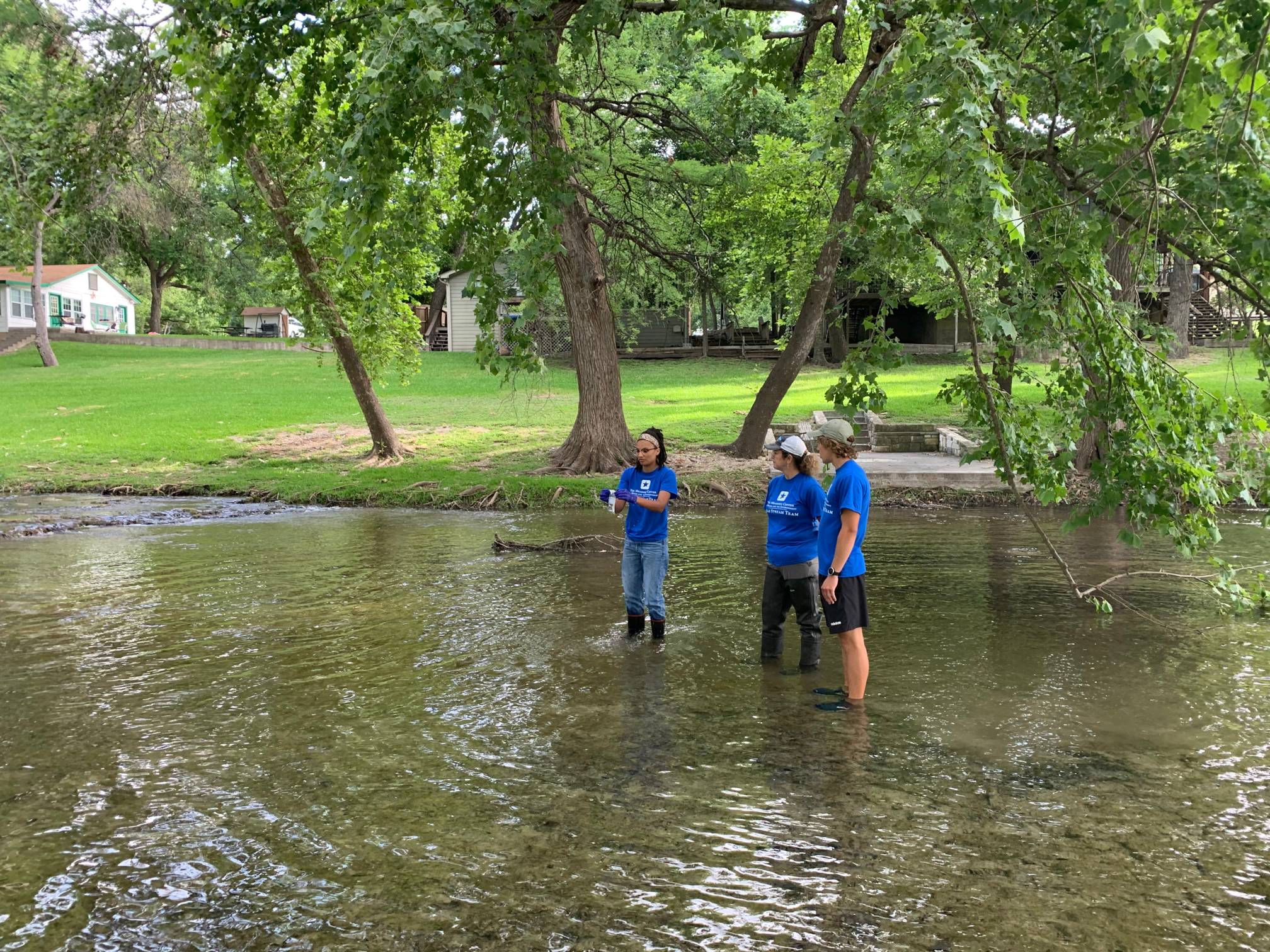
Researchers from The Meadows Center for Water and the Environment at Texas State University, Texas Woman’s University, and the University of North Texas have developed a low-cost way to help Texas communities test rivers and streams for possible human wastewater contamination.
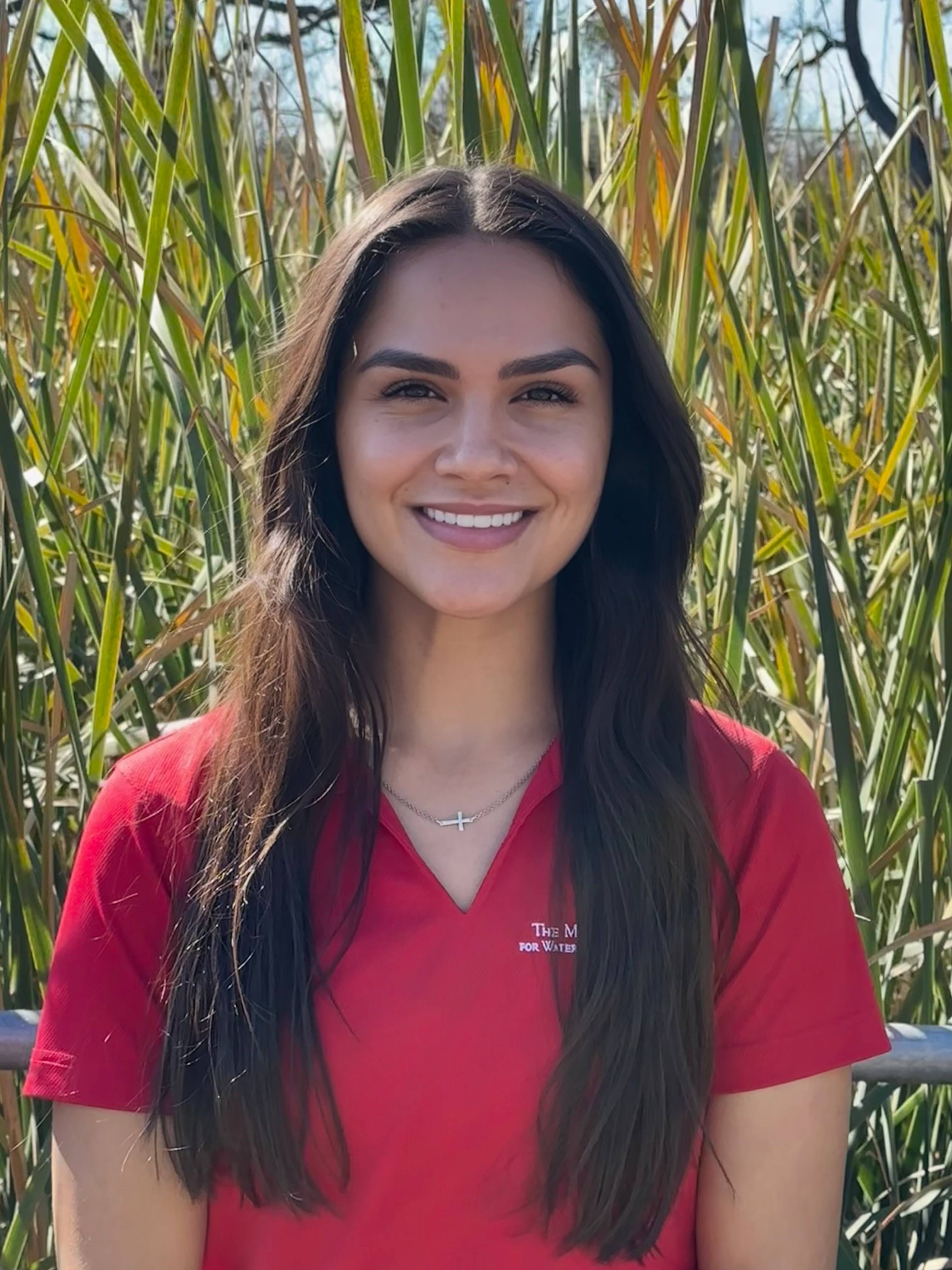
The study, titled “Illuminating Collaborative Opportunities in the Creation of a Community Science Tampling Program,” was led by Aspen Navarro, deputy director of watershed studies at The Meadows Center, and Kelly Albus, Ph.D., of Texas Woman’s University.
It explains how “tampling,” an educational activity co-developed by Albus, became a state-approved monitoring method through work with the Texas Stream Team at The Meadows Center. Tampling uses everyday absorbent cotton as a sampler to detect optical brighteners, fluorescent compounds commonly found in laundry detergents, cleaning products, textiles, and paper products that make materials appear white. The presence of these compounds on surface water can indicate possible contamination from human wastewater.
The research was funded in part by the U.S. Environmental Protection Agency through the Texas Commission on Environmental Quality, the National Oceanic and Atmospheric Administration, and Peter Way of Wimberley. Earlier educational development was supported by the Texas State Soil and Water Conservation Board.
“Cross-university collaboration and sustained support for optical brightener research gave Texas Stream Team the stability we needed to test this method in the field, strengthen our protocols, and transform it into an affordable, practical tool that Texas communities can use as a first step in bacteria source identification,” Navarro said.
From the classroom to the field
After proving successful in classrooms and community programs, the activity piqued the interest of the Texas Stream Team, which partnered with Albus to turn it into a reliable community science monitoring method.
Researchers tested the method at nine locations along the lower reach of Cypress Creek in Hays County, a waterway with a history of bacterial water quality concerns. The team, led by Desiree Jackson, deployed more than 100 samples to evaluate deployment times, contamination risks, and field equipment made from inexpensive supplies. Trained community scientists could use the modified method to screen waterways for possible human wastewater contamination.
The Texas Stream Team then developed the standardized procedures, training materials, quality controls, and data-entry system needed to incorporate optical brightener monitoring into its certified statewide program. After multiple rounds of review by TCEQ quality assurance staff, the method was incorporated into Texas Stream Team’s Quality Assurance Project Plan for certified monitoring. The team launched its Optical Brightener Water Quality Community Scientist Training in 2025.
“From inception, we involved partner communities in developing this method and have continued working closely with them as the program grows,” Navarro said. “We’ve already hosted several optical brightener training courses, focused on regions with known bacteria concerns, and are collaborating with partners in the Dallas-Fort Worth and Houston-Galveston areas to expand monitoring.”
Expanding water monitoring capacity
Tampling does not replace professional water quality testing. The method identifies the presence or absence of fluorescence, but it does not measure the severity of contamination. As a low-cost preliminary screening method, tampling can help identify locations where more intensive testing or infrastructure investigation may be warranted. Then professional monitoring programs can focus time and resources on areas with potential pollution concerns.
The approach also expands opportunities for residents to participate in monitoring and contribute meaningful environmental data. Texas Stream Team’s statewide network provides a structure for broader use across Texas, while a separate public version of tampling is available through SciStarter, an online platform that connects volunteers with community science projects and creates opportunities for participation beyond the state.
The study demonstrates how collaboration among researchers, educators, community members, and regulatory agencies can move an accessible idea from the classroom into a scientifically credible water quality program. What began as a classroom experiment now gives communities a practical, low-cost way to help identify where wastewater pollution may be entering their waterways.