
TXST microbiologist shows how spaceflight changes bacterial biofilm structure and composition

TXST researchers found that spaceflight, surface material and time can change the structure of bacterial biofilms, with implications for water-recycling systems on long space missions.

Texas State University Distinguished Professor Emeritus of Biology, Robert J.C. McLean, Ph.D., led a study revealing how spaceflight changes the structure and composition of bacterial communities.

The findings appear in “Spaceflight-induced changes in polymicrobial biofilm population and structure,” published in npj Microgravity. The study compared how two bacteria formed biofilms aboard the International Space Station and on Earth.

Biofilms are sticky communities of bacteria that attach to surfaces. Dental plaque and slime on river rocks are common examples. In spacecraft, biofilms can build up in water-recycling equipment.

To understand the risks of bacteria from a crew member’s urinary tract infection entering a spacecraft water-recovery system, the team mixed E. coli, the bacterium most often linked to UTIs, with P. aeruginosa, a bacterium used in earlier spaceflight experiments.

The two species grew together in artificial urine on Teflon and stainless-steel surfaces inside small chambers called BioCells. Some BioCells travelled to the International Space Station, while matching samples remained on Earth, allowing researchers to compare how the mixed biofilms formed over time.

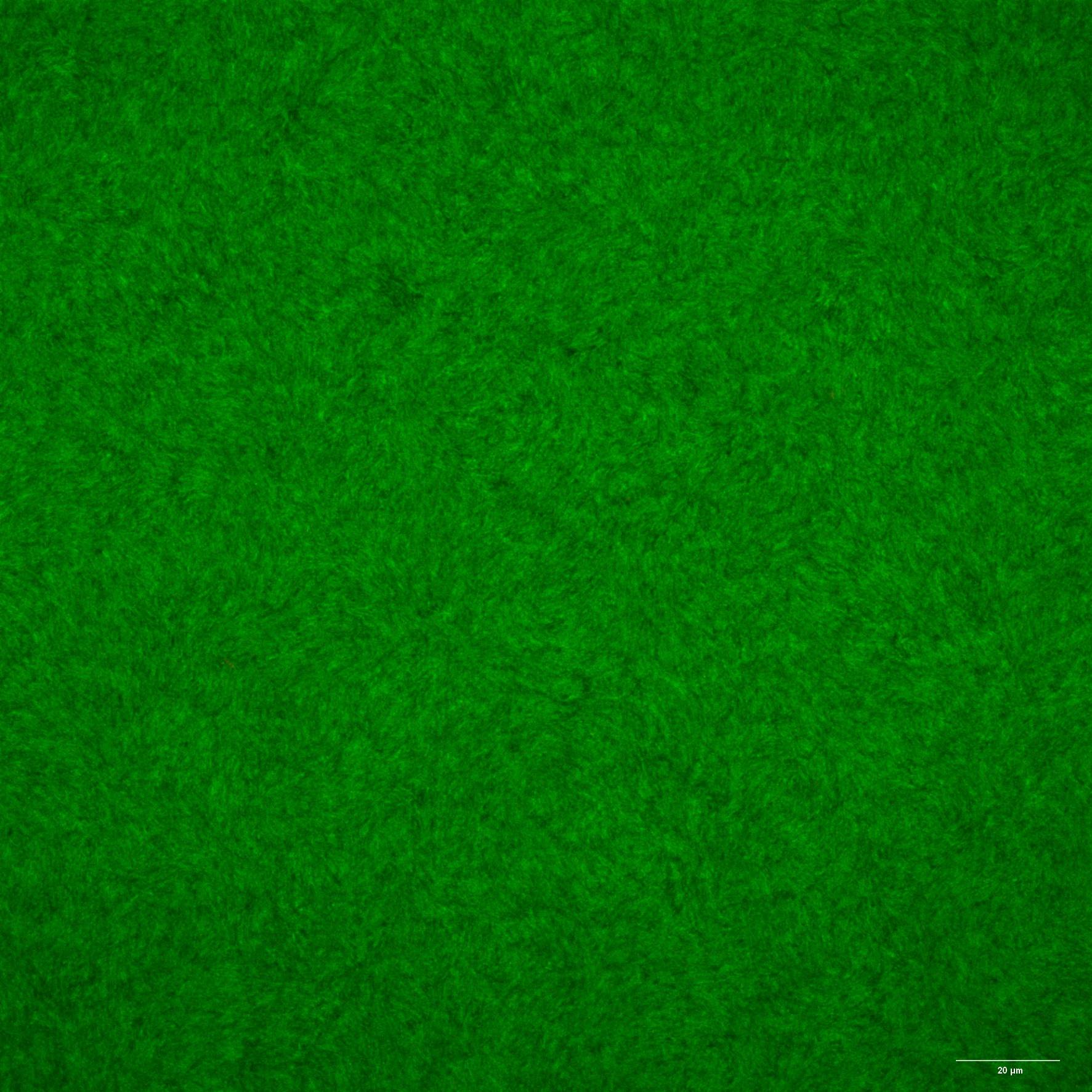
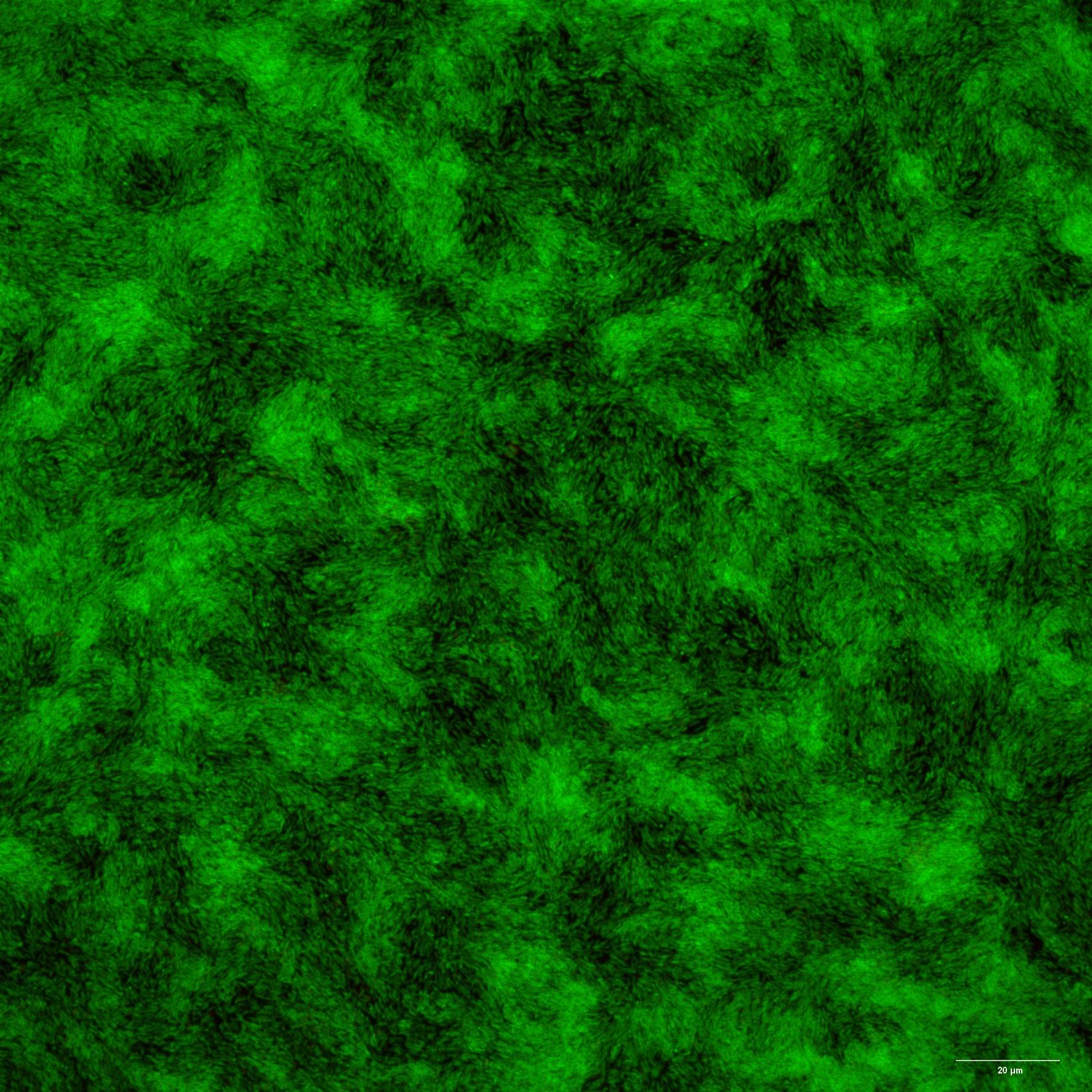
The first discovery came after four days. On Teflon, the spaceflight bacteria formed dense clusters that resembled Vincent van Gogh’s painting The Starry Night. The Earth-based samples formed a flatter, more even layer. 
Fluorescence microscopy image showing clusters of green-stained microscopic structures separated by darker regions in a flight sample.
Spaceflight bacteria sample
Fluorescence microscopy image showing a relatively uniform distribution of green-stained microscopic structures in a ground-based sample.
Earth-based bacteria sample

The biofilms continued to change over time. By day 14, P. aeruginosa had become the main species in nearly all samples, while E. coli was most common early in the experiment. Biofilm growth on stainless steel stayed relatively steady from day four to day 14, while growth on Teflon declined. At 117 days, the few P. aeruginosa cells left on stainless steel had become noticeably longer.

Taken together, the findings reveal that spaceflight, surface materials, and time can impact the appearance of bacterial communities in which species thrive.

“When bacteria grow that way, they’re a lot more resistant to any antimicrobial agent, antibiotic or disinfectant,” McLean said. “Before the water is purified, biofilms can possibly clog pipes or valves.”

The resistance can be detrimental during long missions. Astronauts recycle water from moisture in the cabin air and from crew urine. The water-recycling system must remove microbes before the water returns to the crew. Biofilms that resist disinfectants could make that job harder.

The study also raises a new question for the team about how biofilms can be controlled in space. In a separate analysis from the same research program, McLean’s team found that a small number of bacteria from a 117-day spaceflight sample became resistant to a silver-based disinfectant. The same result did not appear in the Earth-based controls.

Researchers at Arizona State University are now studying the bacteria’s genetic changes to learn how the silver resistance developed. The finding is especially important as NASA considers silver as an alternative to iodine for controlling microbes in spacecraft water systems.

McLean’s research builds on nearly three decades of spaceflight biofilm work. His first experiment, developed with eighth-grade students, flew aboard the STS-95 space shuttle mission in 1998.

The new study reflects a long collaboration among TXST, Arizona State University and NASA. Taylor M. Ranson, M.S., Starla G. Thornhill, Ph.D., and Jiseon Yang, Ph.D., share co-first authorship. Ranson is a former TXST graduate student, and Thornhill earned her doctorate at TXST and now works at NASA.

Other contributors include Jennifer Barrila, Ph.D., Sandhya Gangaraju, Richard R. Davis, Cheryl A. Nickerson, Ph.D., Alistair I.L. McLean and C. Mark Ott, Ph.D. NASA supported the research. 

For more information, contact:

TXST Office of Media Relations, 512-245-2180