
Texas State University joins new Feed the Future Innovation Lab for Fish

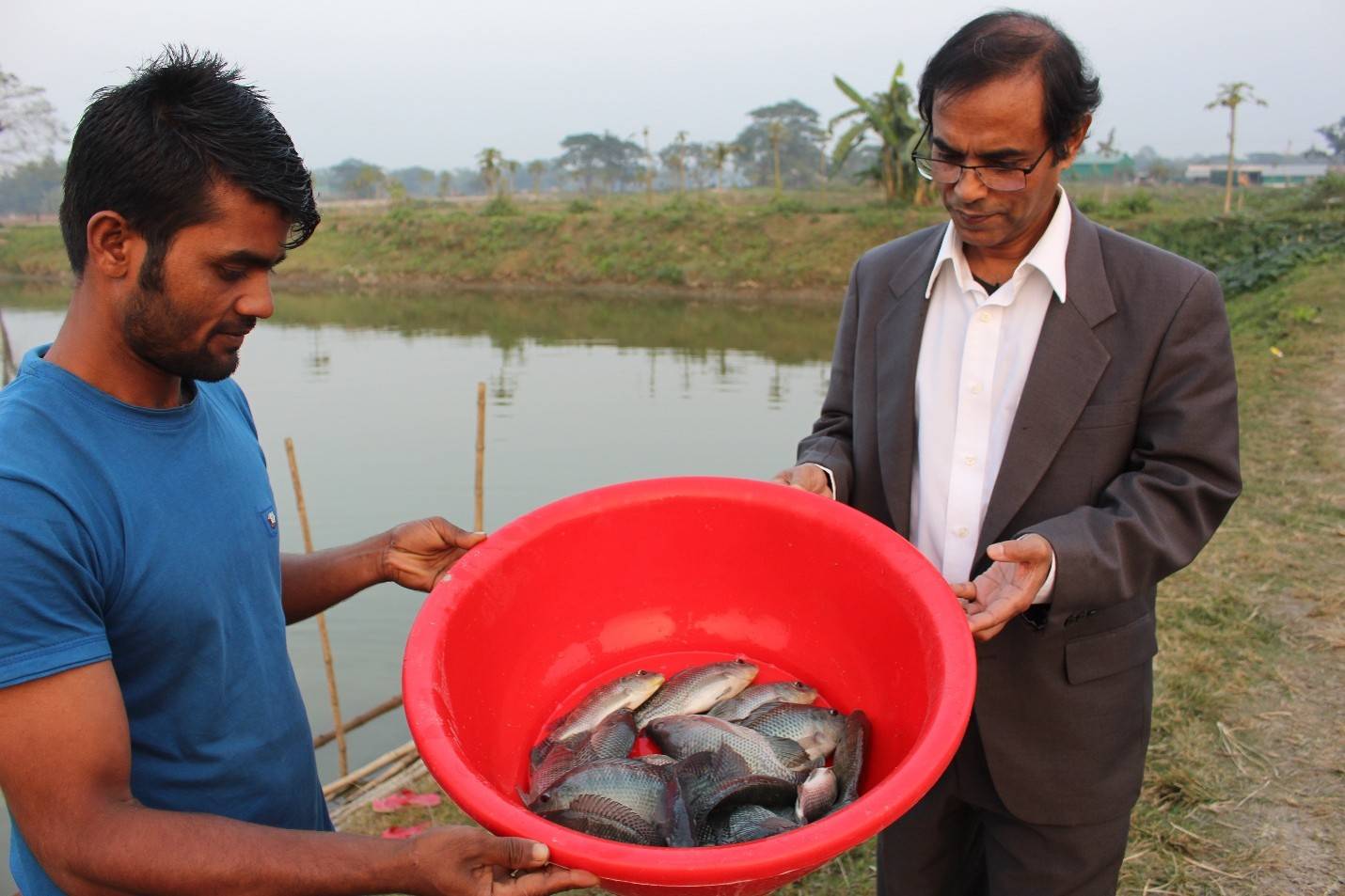
two men holding large red bucket filled with fish
Dey visiting a tilapia breeding facility in Bangladesh.

The multi-institution initiative will develop practical innovations addressing aquaculture production, aquatic animal health, fisheries, food safety, nutrition and market development. 

Texas State University has joined the new Feed the Future Innovation Lab for Fish, a multi-institutional initiative supported by the U.S. Department of State to advance research and innovation that strengthen global aquatic food systems and create benefits for U.S. agriculture, industry and food security.

Feed the Future Innovation Lab for Fish will be led by Mississippi State University and housed at the MSU Global Center for Aquatic Health and Food Security, while TXST will oversee the technical component on economics, markets and trade. 

The Department of Agricultural Sciences at TXST has extensive research experience in aquaculture and fisheries economics and marketing in the U.S. and developing countries. Over the next few months, TXST will develop projects and activities in this area for approval by the Fish Innovation Lab Technical Board, the Feed the Future Innovation Lab for Fish leadership at MSU and the U.S. Department of State.
Dey will serve as the technical lead for economics, markets and trade and as a member of the Feed the Future lab technical board. He is a preeminent aquaculture and fisheries economist with wide-ranging, long-term contributions in teaching, research, service, policy and leadership. He was named a Fellow of the International Institute of Fisheries Economics and Trade (IIFET).

TXST’s activities will generate evidence to guide market development, trade and investment decisions in aquatic food systems. The work will focus on analyses of aquatic food supply, demand and trade, as well as value chains, to identify opportunities to improve food and nutrition security while strengthening mutually beneficial trade relationships with the U.S. Expanding market access for U.S. agricultural exports, such as soybean meal for aquaculture feed, will also be a priority.

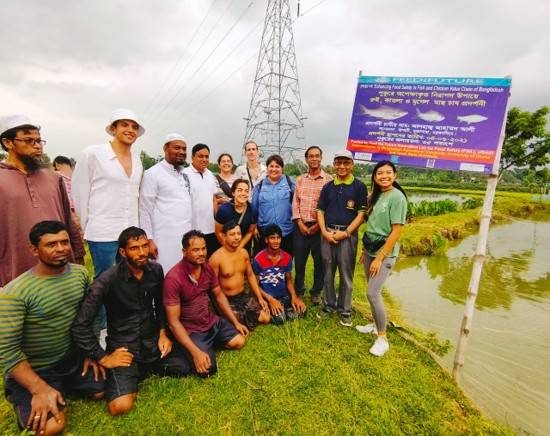
large group of people standing next to pond in Bangladesh
Madan Dey, Ph.D., with TXST students, research partners and local farmers/collaborators visiting an experimental site in Muktagacha, Mymensingh, Bangladesh.  

Overall, the lab will bring together researchers, universities, government agencies, industry partners and other organizations to develop, test and scale practical innovations addressing aquaculture production, aquatic animal health, fisheries, food safety, nutrition and market development. 

Increasing the production and consumption of aquatic foods is central to the lab’s mission to reduce poverty, hunger and malnutrition while producing tangible benefits for the United States. Research will focus on solutions that can move from development to practice, including opportunities to open international markets for U.S. products and technologies and strengthen the protection of U.S. aquaculture from emerging disease and biosecurity threats.

More information on the Global Center for Aquatic Health and Food Security is available at www.gcahfs.msstate.edu.

For more information, contact:

TXST Office of Media Relations, 512-245-2180