

Intense anti-aircraft fire peppered the sky as the U.S. B-17 bombers released their payload, pounding the Nazi naval storage warehouse complex at Rennes during the height of World War II. Luftwaffe FW-190 fighters swarmed the bombers, charging them head-on in a blaze of machine gun fire.
Amid the intense firefight, one B-17 fell out of formation, crashing into the French countryside. Of the 10 crewmembers, three bailed out and survived. The rest did not, including four individuals who remain missing.
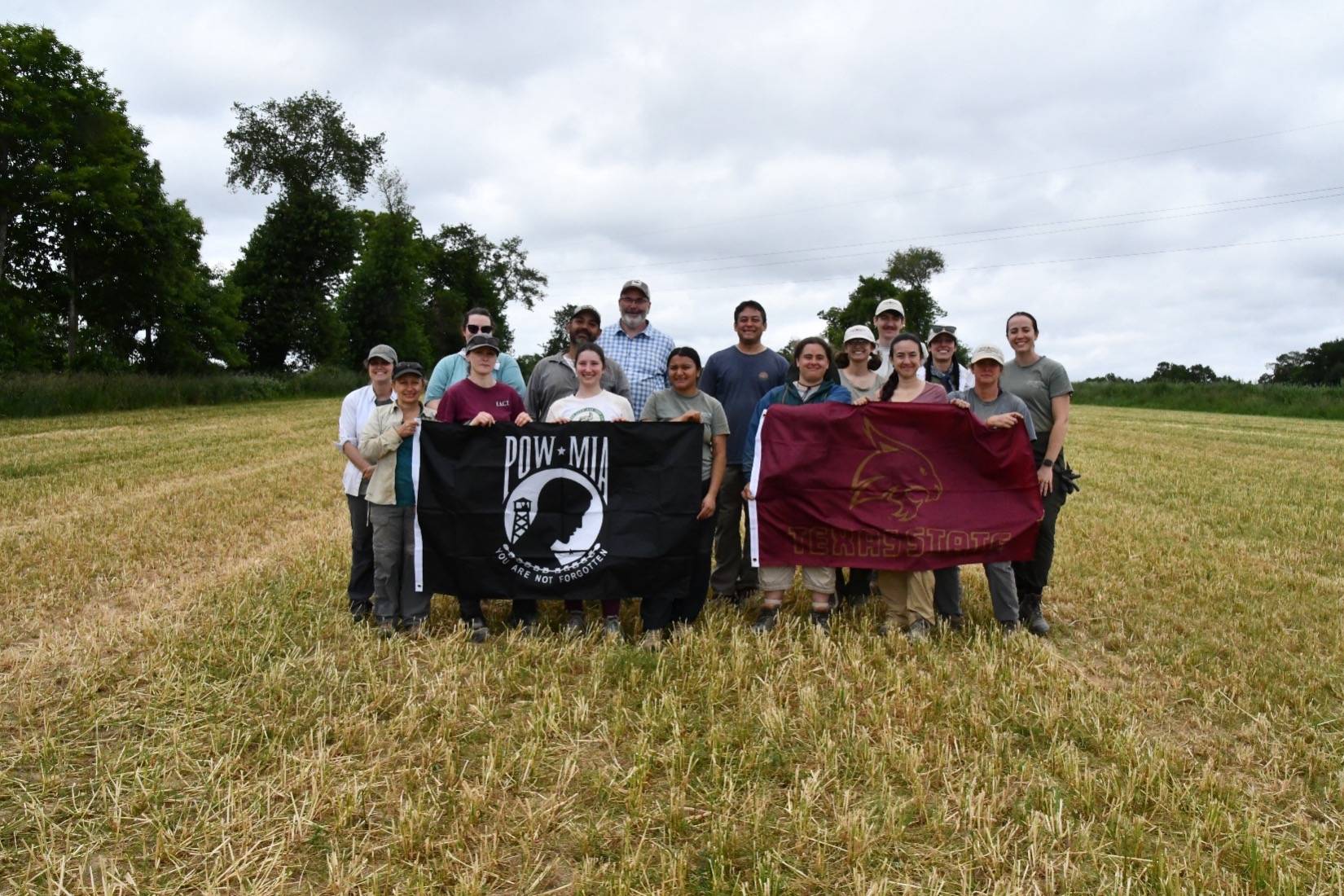
Now, 82 years later, a team of anthropology graduate students from Texas State University traveled to France under a grant from the U.S. Defense POW/MIA Accounting Agency (DPAA) to attempt to locate and repatriate the remains of four missing crewmen from that ill-fated flight.
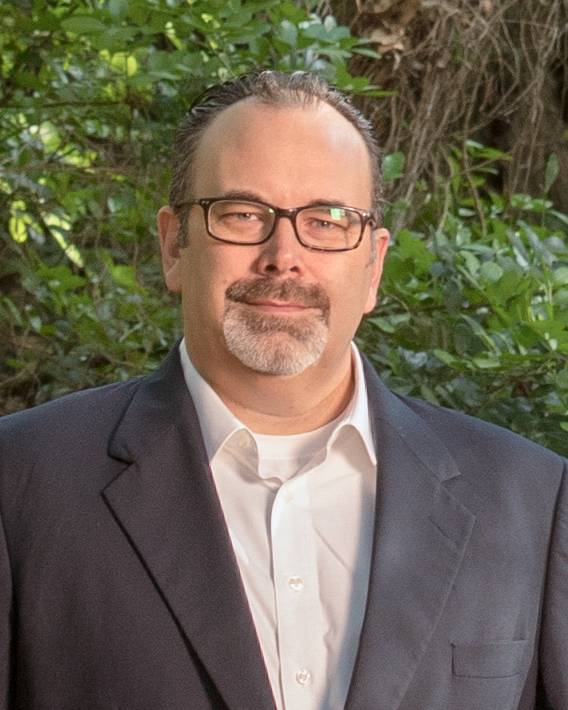
Todd Ahlman, Ph.D., director of the Center for Archaeological Studies at TXST, Nick Herrmann, Ph.D., a professor in the Department of Anthropology, and Ashley McKeown, Ph.D., professor of instruction in the Department of Anthropology, led a team of 11 applied anthropology doctoral students plus a recent graduate who served as an interpreter on the four-week dig. The DPAA provided fieldwork and guidance for the team, along with the $280,000 grant that covered travel, room, board and the advanced equipment used during the excavation.
“We really wanted to do this, to provide opportunities for our graduate students to train on these missions. DPAA contracts out many of these recovery operations to expand their capabilities because they can only do so much,” Ahlman said.
“We want to give them real-world experience and I think that this agreement with DPAA is a good way to do it.”
Keegan Beane, a doctoral student from upstate South Carolina, felt she was well-prepared for the project, having trained on a similar one in Germany the prior year. Her research interest and dissertation focuses on mass graves from the first half of the 20th century, a background that has special resonance when dealing with World War II.
“Anthropology can span from excavating ancient sites to recent ‘now’ moments for forensic cases and things like mass graves. I have a little bit of experience having that feeling of projects being very close to me in time. I was able to meet family members of mass grave victims. You feel how close in time it is to you,” Beane said. “In biological anthropology, we always try to look at remains we might find as being a person who was living and had a life.
“In the case of what we were working on for the DPAA on this France mission, it definitely was a lot more close to time now,” she said. “We still see the impact that it has on people in the area. Those residual impacts sometimes never really go away--seeing that [war impact] throughout the area was very difficult.”
The lingering impact decades later also struck a chord with doctoral student Emma Giacomello, an East Texas native who grew up in Huntsville.
“One thing that surprised me was the lasting impact [the crash] had on the community,” Giacomello said. “World War II is relatively recent in the grand scheme of things but there's not a ton of people still around that necessarily have the memories or the lived experiences. Still, you could tell the community had a lot of respect for the servicemen who ultimately died.
“The people there seemed thankful for the work we were doing, even though our work had no direct impact on them,” she said.
“It wasn’t their family members. But they were grateful for the actions of those service members, all those years ago.”
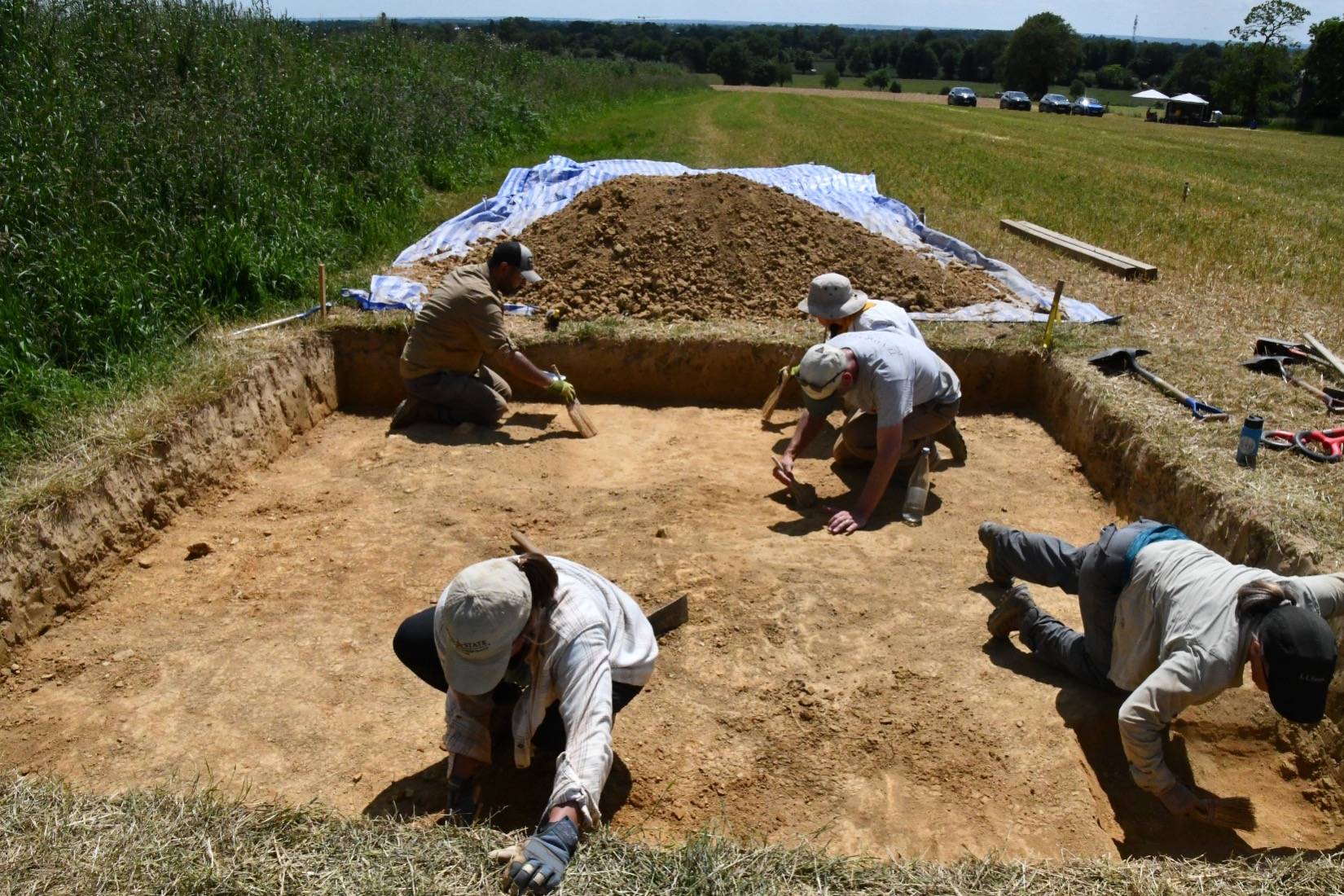
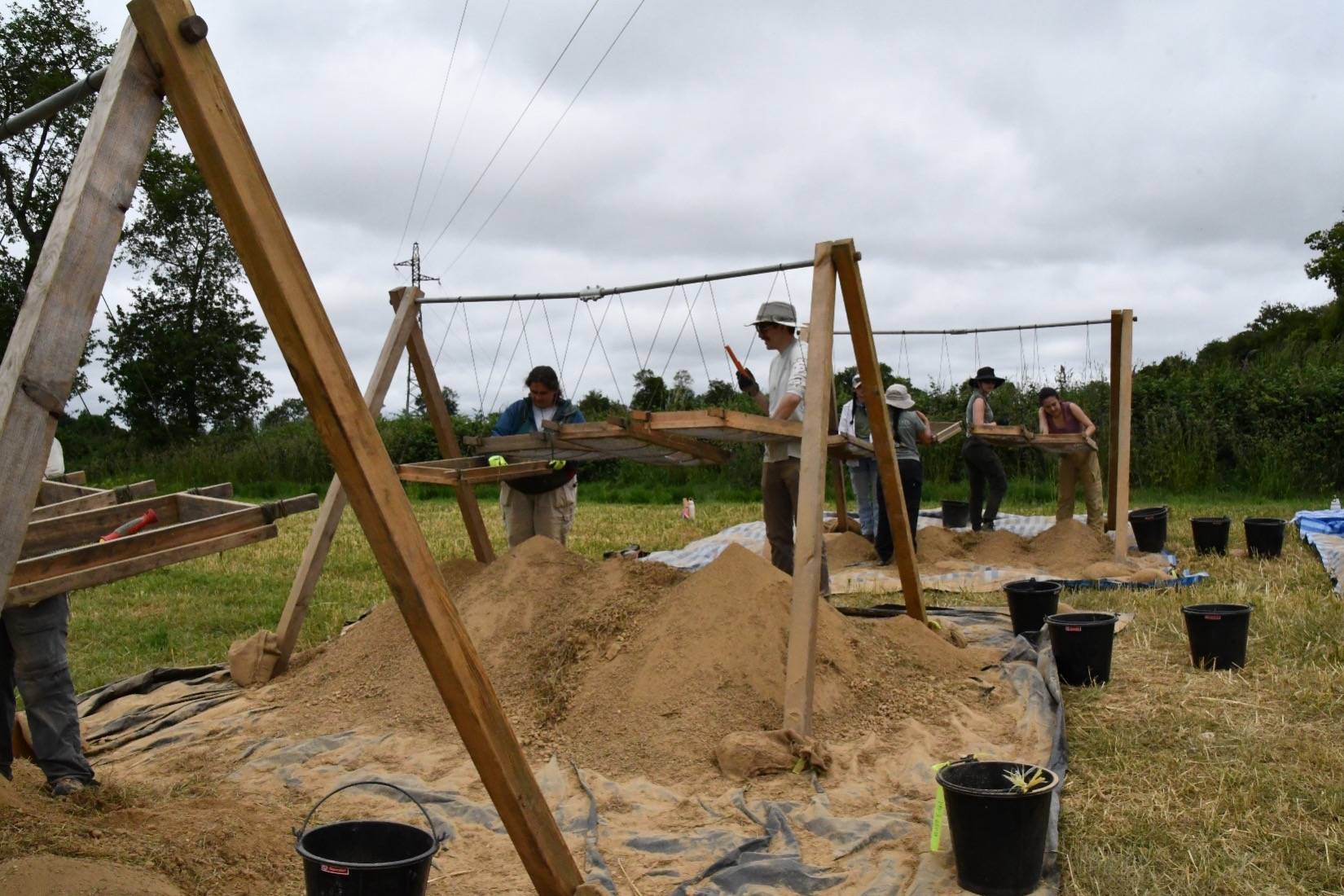
The DPAA had the site prepared for the team, with sunshades and screens for separating artifacts from soil, along with other necessary equipment set up and ready to go. The TXST students would meet on-site in the early morning, discuss their roles and objectives for the day with DPAA representatives and get to work.
For TXST doctoral student Rebekah Stowe, the work was challenging but rewarding. Growing up in Covington, Ga., she first learned about forensic anthropology through her stepfather, a police officer. She found the concept fascinating and pursued it as a career. Despite Hollywood’s portrayals, the work of a forensic anthropologist is far from glamorous.
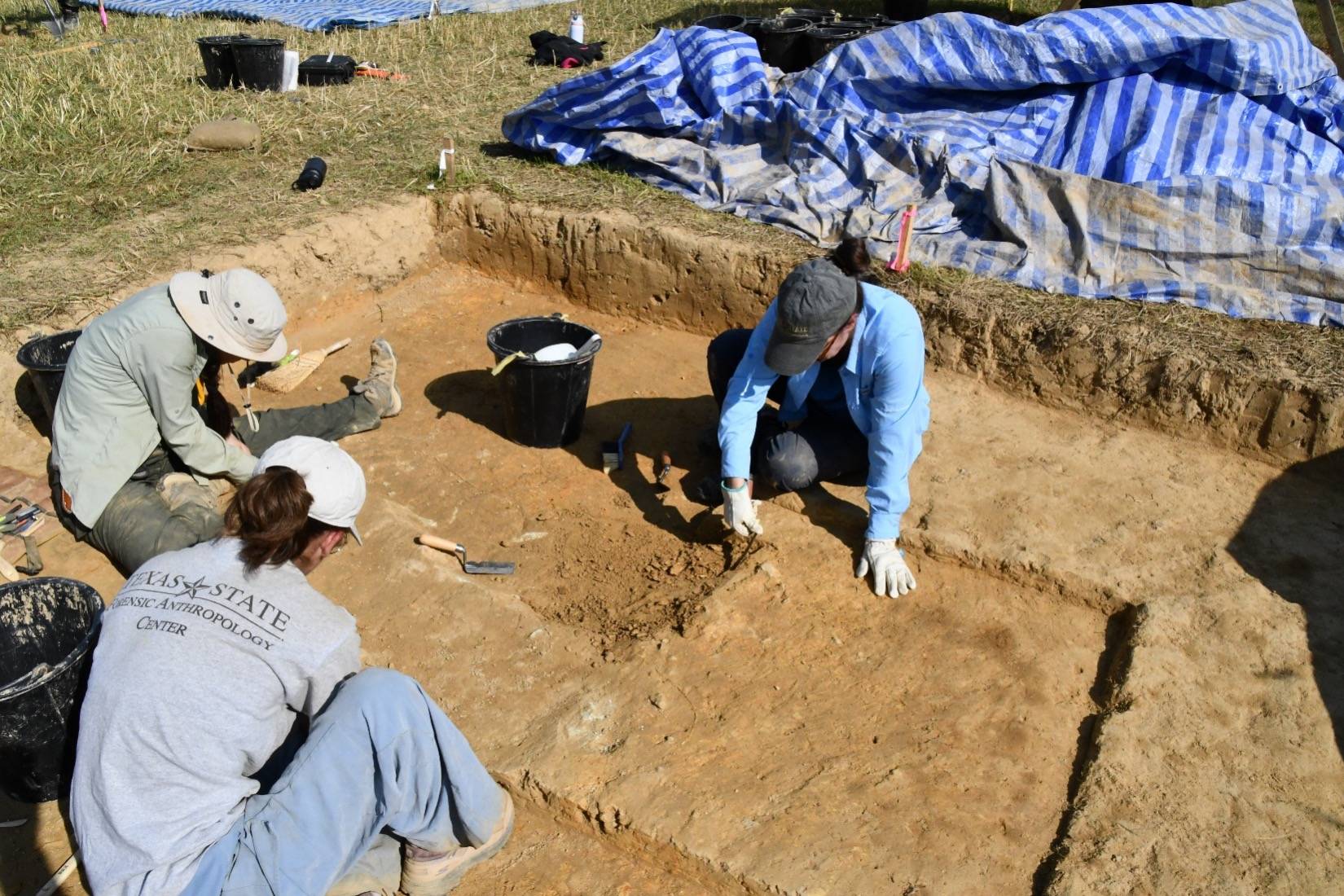
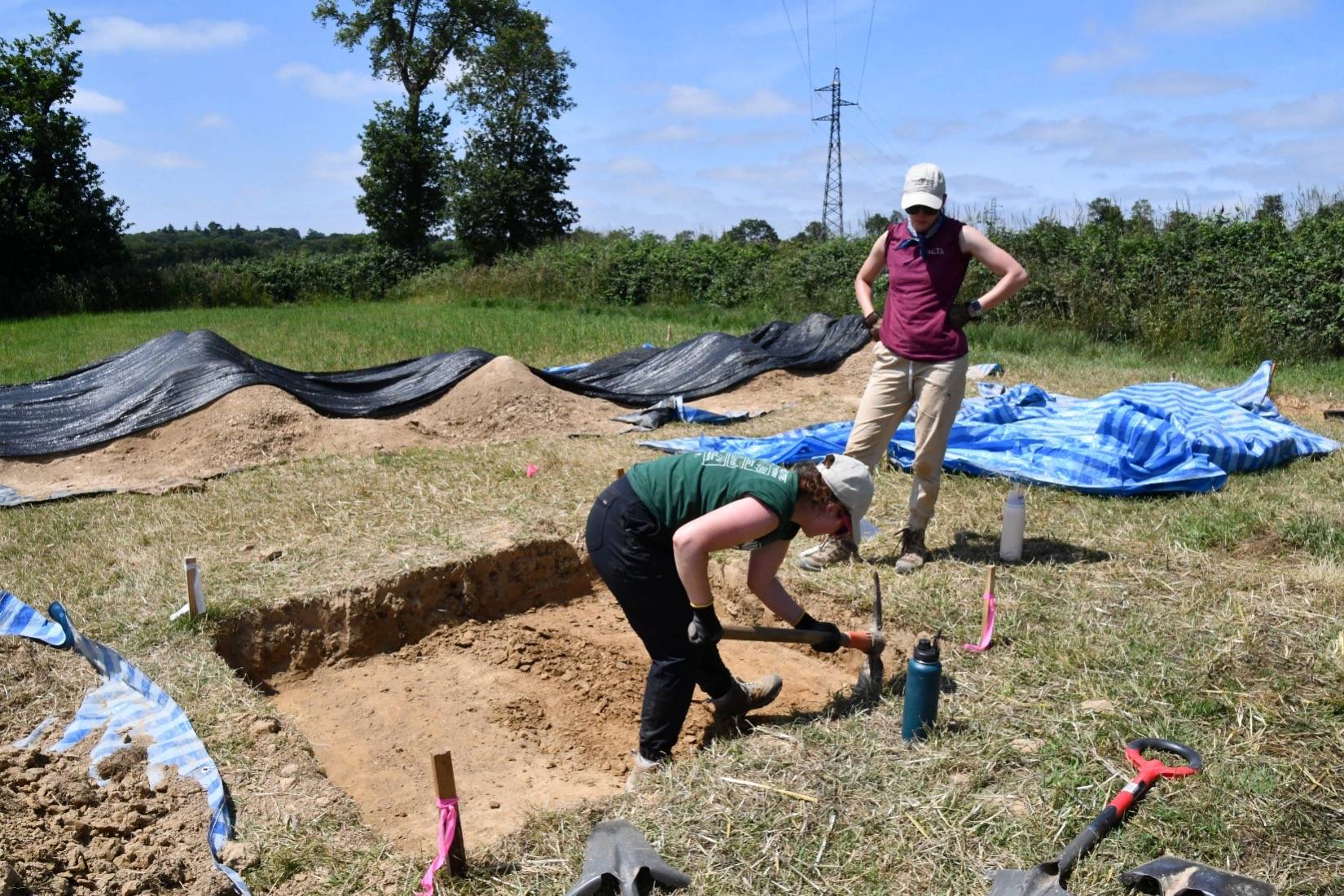
“We would either be on a [filter] screen for most of the day, or be digging, using what’s like a big pickaxe,” Stowe said. “We'll dig using that, trying to look as we go, trying to notice any artifacts or bones. Once the dirt was removed, it would go to the screen, and someone would screen it.
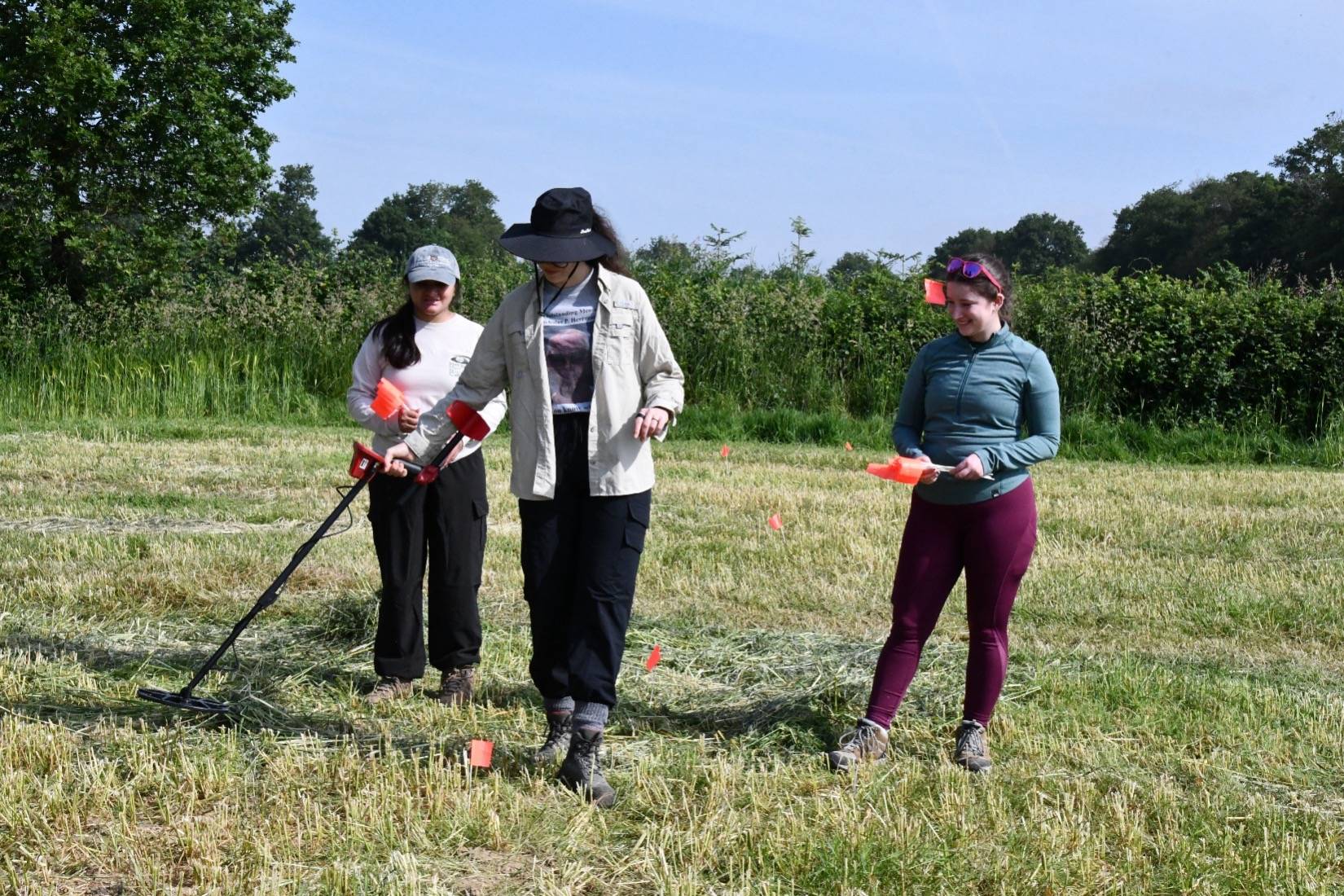
“We had metal detectors to try to also help find any artifacts, and then we were searching through the soil to find any little bone fragments,” she said. “I've never worked at a site with debris from a plane crash, so that was interesting to see. The soil was not very cooperative with what we wanted to do, so that was a new challenge to deal with.”
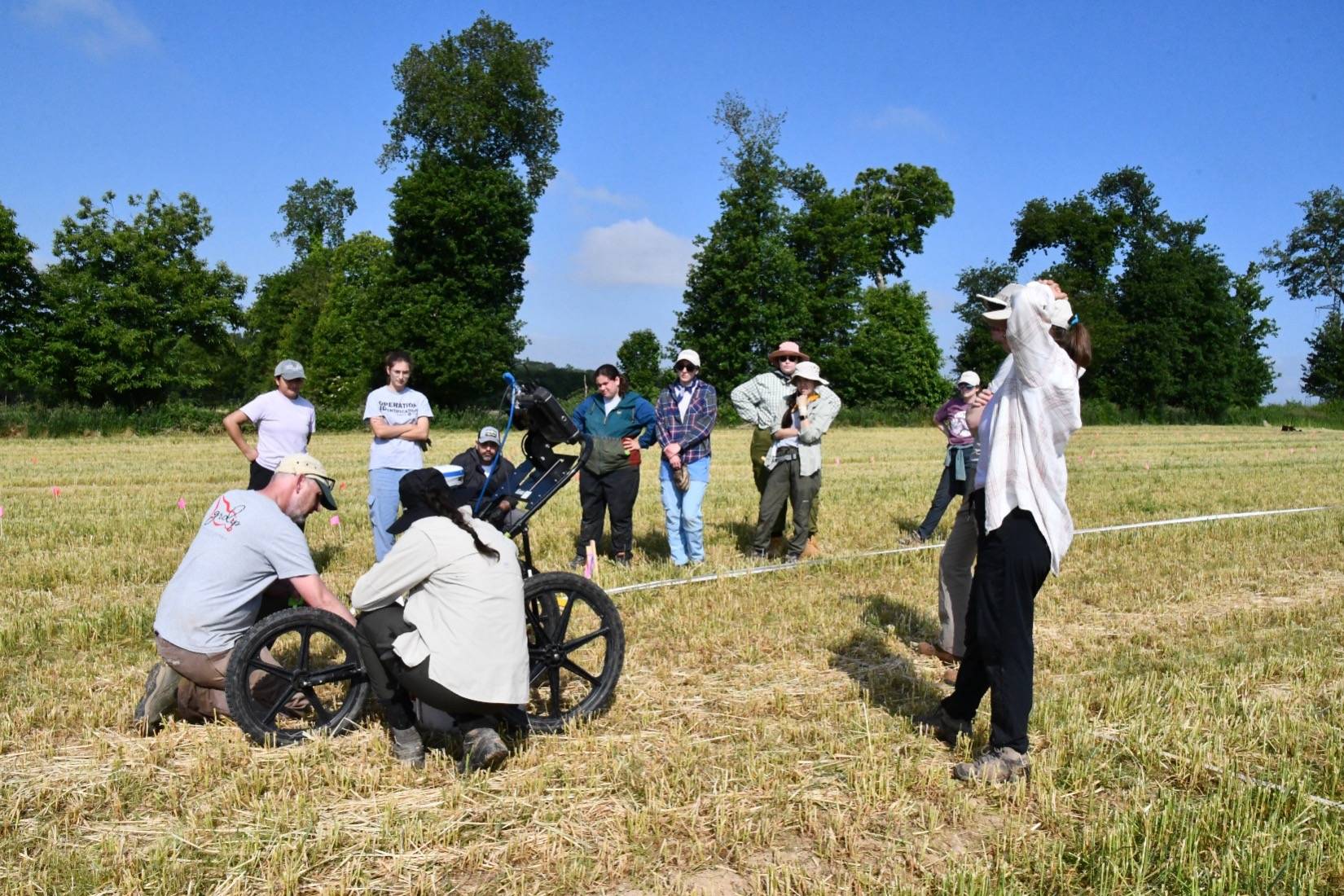
Because the crash did not leave a crater, the team used a variety of techniques to evaluate the crash site. They started with a metal detector survey, then followed with ground-penetrating radar and finally a gradiometer. Only after they had a general model of what was hidden below ground to work from did the team divide the site into units and begin excavating. Over the course of the dig, they recovered significant debris from the wrecked U.S. bomber.
The researchers took advantage of free time to visit nearby historical sites related to their mission. One weekend they visited Omaha Beach, site of the U.S. Normandy landings on D-Day.
“After visiting Omaha Beach, we then went to the Normandy Cemetery, which was very moving,” Ahlman said. “Ashley [McKeown] and I were standing there and all of a sudden they start playing the Star-Spangled Banner. Everybody just stops. People start singing. Even Europeans just stop. And then they play taps and I'm just like, ‘Oh God.’ That was just an incredibly moving few minutes."
“The students, I think really, appreciated it. The feedback that we've gotten from the students is that it was very helpful for them for their careers. Several of them have asked, ‘If you go back next year, can I go along?’” he said. “It’s also a humanitarian exercise. I think for some of the students, that aspect of this work is very appealing. A lot of our students are into humanitarian work, and I think this feeds that training.”
The impact on the students—both personally and professionally—will be lasting. Many of them hope to continue working with DPAA in the future, and the tangible knowledge and skills they’ve developed over the four-week project are something that cannot be learned in a classroom.
“It was definitely a great experience,” Stowe said. “We got to work with multiple different technologies for surveying and we got to learn more about how the DPAA operates at a site.
“The DPAA is such a great program and such a large employer of forensic anthropologists, so to have any experience with them is a great opportunity,” she said. “I'm very grateful to have been able to go. I would eventually like to continue working with them, as I really believe in their mission of bringing lost American service members home.”