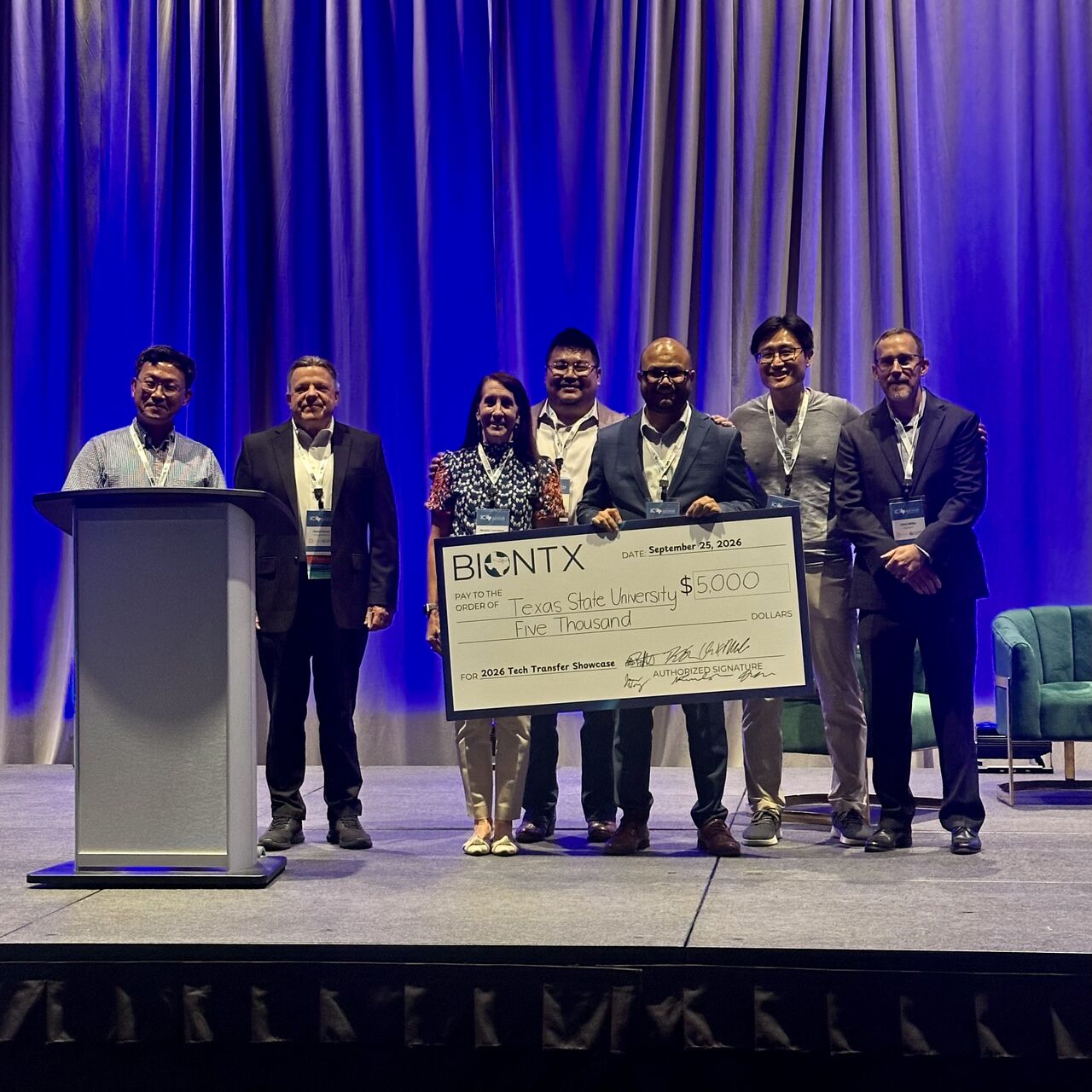
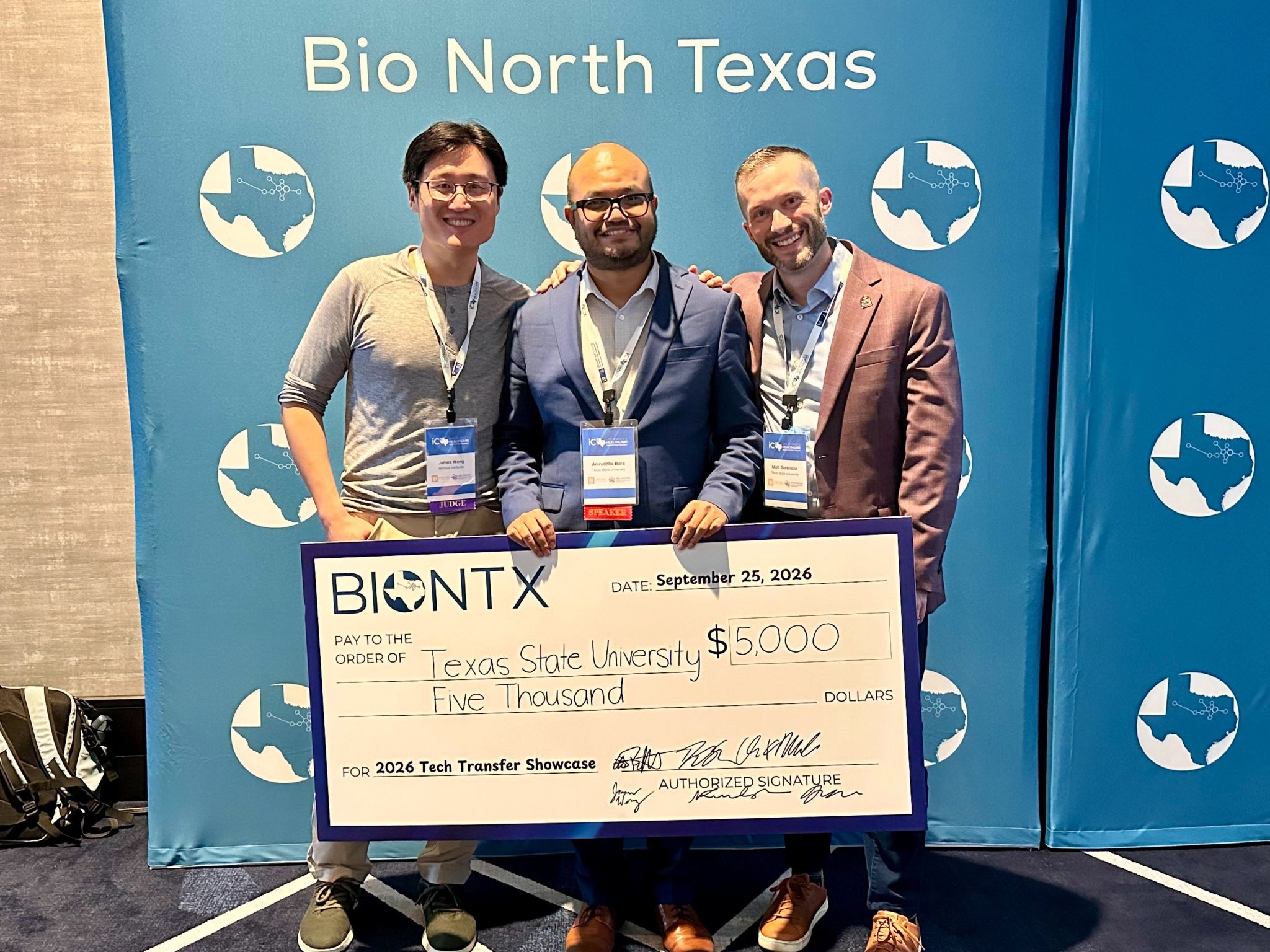
At TXST, early guidance from Office of Innovation, Commercialization & Engagement staff encouraged Bora to protect promising ideas with patents and consider commercial paths. The university’s BobCatalyst initiative, led by Matt Sorenson, Ph.D., also prepared Bora to explore who could use the technology and whether it could meet a real need.
“We have a great understanding of the science, but I am still learning the other side so I can take work from my lab into something useful for the public,” Bora said.
Last fall, Carolyn T. Chang, Ph.D., director of the Bioscience Education and Training Research Programs at TXST’s Translational Health Research Center, introduced Bora to the Nucleate Texas Activator, an equity-free accelerator program. At the statewide final May 29, the Noema-Laser team won the Popular Choice Award.
That early recognition propelled the Noema-Laser team to the BioNTX showcase, where industry mentor James Wang helped Bora prepare for the competition.
The progression from campus to Nucleate and BioNTX shows how a connected support system can move faculty research toward a successful startup venture. It brings student talent, mentorship, research support and industry relationships together around ideas that could create public benefit.
“I do not want to keep research restricted to academia,” Bora said. “I want it to be used by people.”