

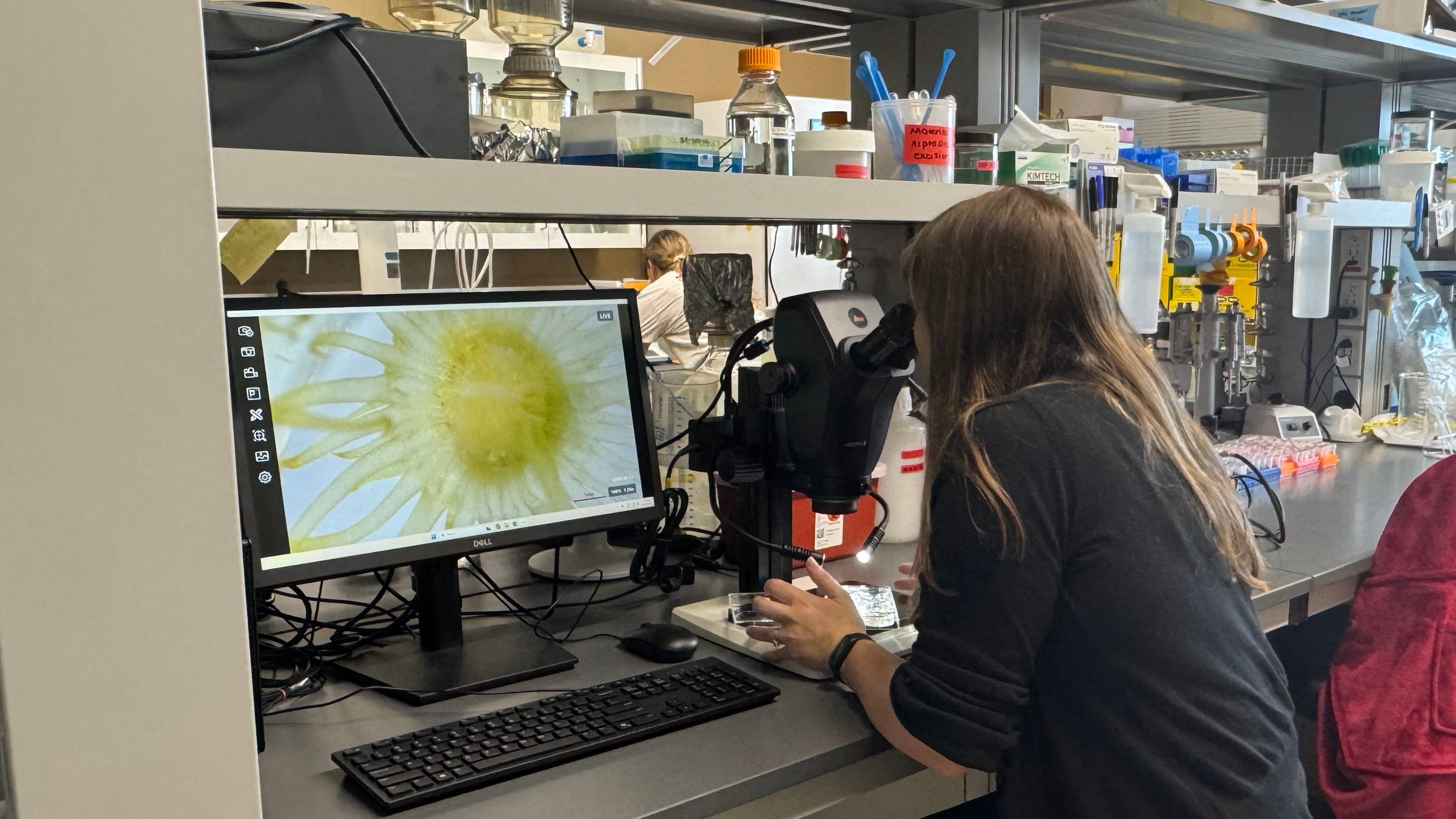
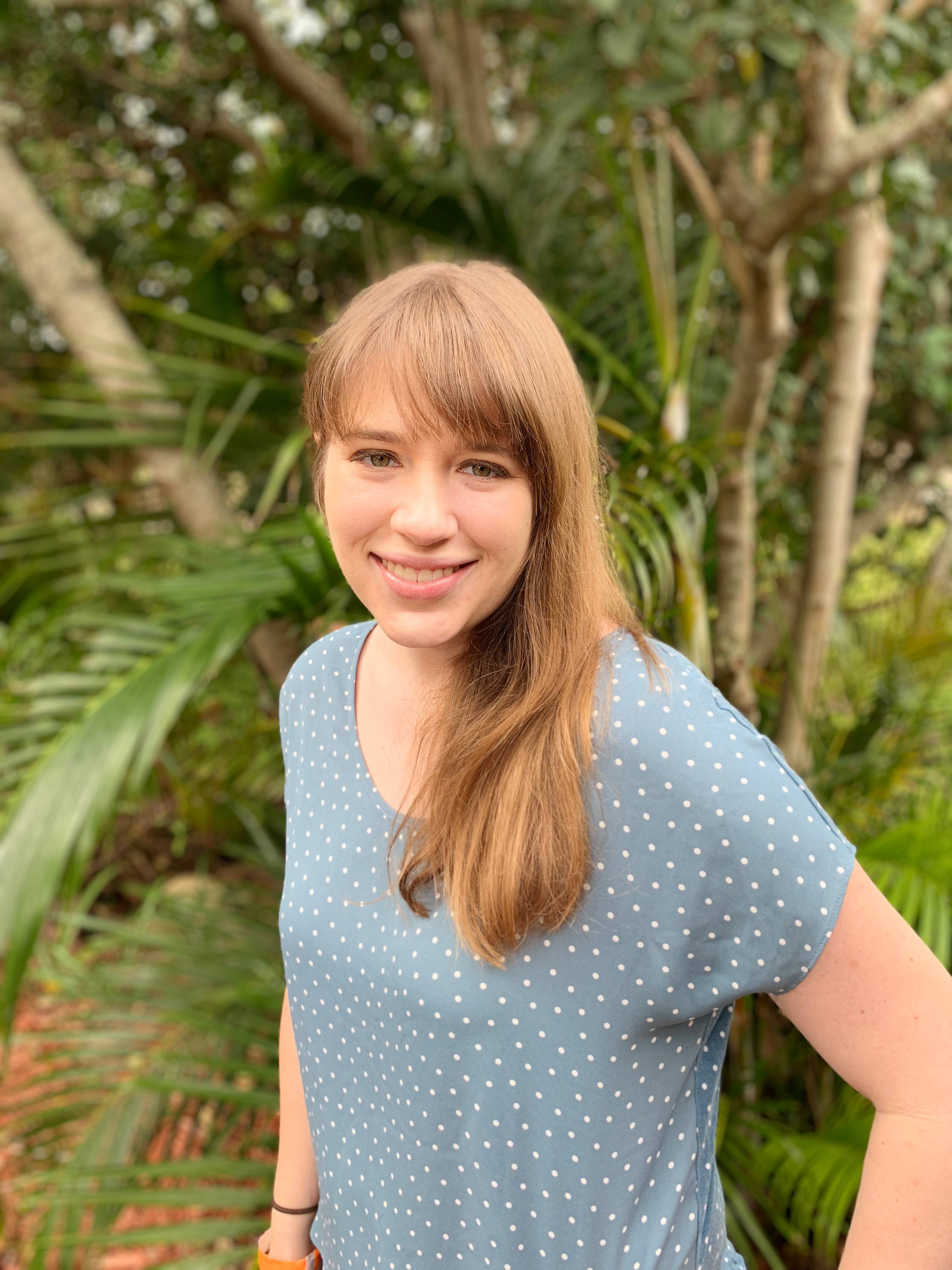
A microbial partner that helps one individual may not help another. Lauren Fuess, Ph.D., associate professor in the Department of Biology at Texas State University, wants to understand why. Her research will examine how an individual’s genetics, its microbial partner’s genetics, and their environment shape whether the partnership succeeds.
To conduct the research, Fuess received a five-year, $2.1 million Maximizing Investigators’ Research Award (MIRA) from the National Institute of General Medical Sciences, part of the National Institutes of Health. Under the project title “Mechanisms of Intergenomic Epistasis and Environmental Context in Animal-Microbe Symbioses,” the award will give Fuess greater stability and flexibility to follow new questions about animal-microbe relationships as the research develops.
“At the center of this research is a simple question: if a microbial partner benefits one individual, will it benefit another?” Fuess said. “We want to understand how the genetics of both partners and the environment shape the answer.”
The researchers will study Aiptasia, a small sea anemone, and its single-celled algal partners. Aiptasia is related to corals and shares key immune features with mammals, making it a useful bridge for studying coral conservation and human health.
Hundreds of genetically identical Aiptasia clones will allow the team to compare different algal partners as conditions change. TXST students and early career researchers will run experiments and decode genomic data using bioinformatics and artificial intelligence tools.