

TXST anthropologist Kate Spradley named MacArthur Foundation ‘Genius Grant’ recipient for 2026

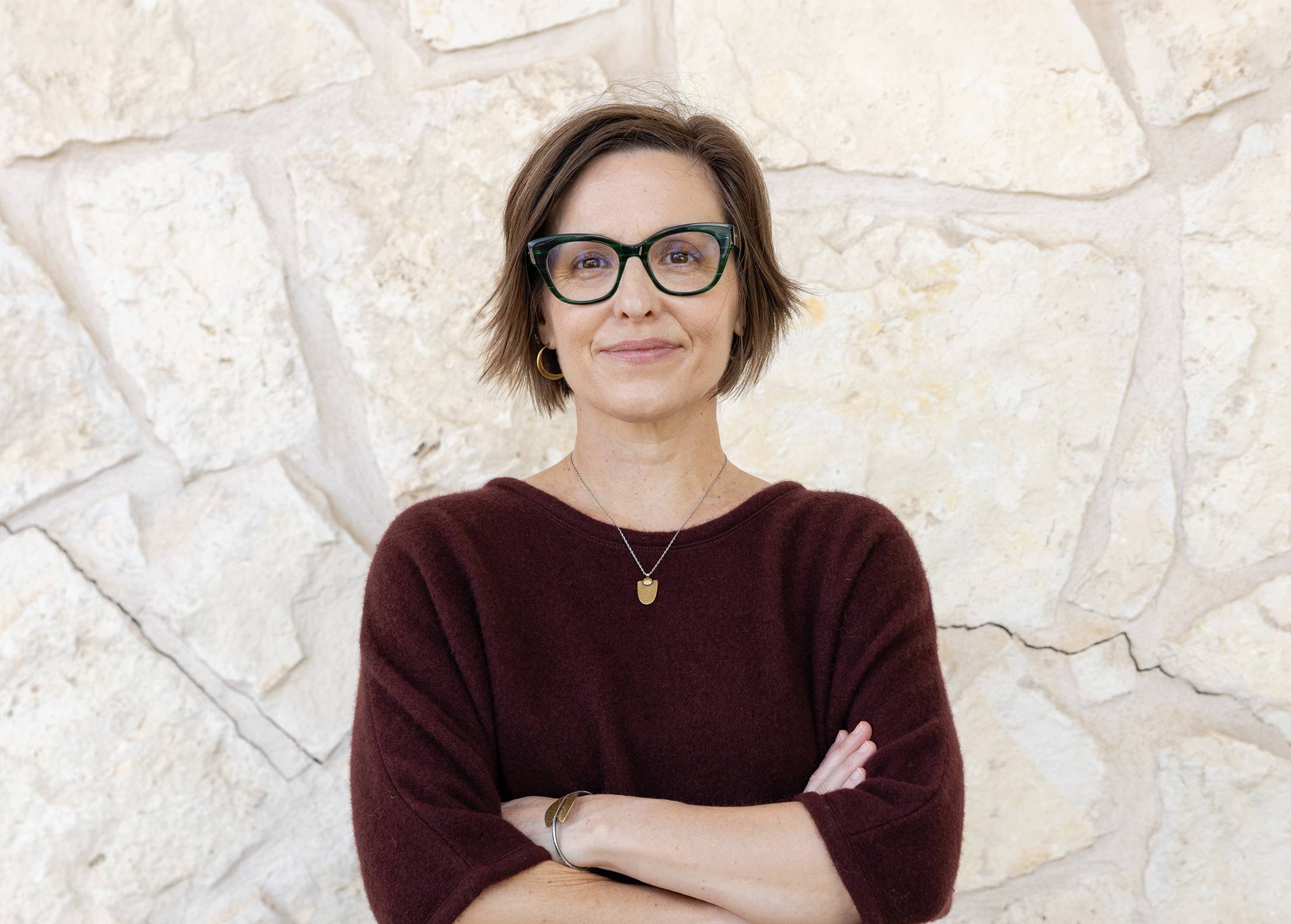
kate spradley stands with arms crossed in front of light-colored rock wall
Photo credit: John D. and Catherine T. MacArthur Foundation.

The MacArthur Foundation recognized Spradley for her ongoing work as founder and director of Operation ID, which identifies and repatriates human remains found along the Texas-Mexico border. 

The John D. and Catherine T. MacArthur Foundation has named Texas State University’s Kate Spradley, Ph.D., one of the foundation’s 20 fellows selected for 2026. 

The honor, often referred to as a “Genius Grant,” comes with an $800,000 prize, paid over five years that fellows can spend however they choose.

Spradley, a professor of anthropology with the Forensic Anthropology Center (FACTS) at TXST, was selected for her work as founder and director of Operation ID, a humanitarian initiative dedicated to facilitating the identification and repatriation of unidentified human remains found along or in close proximity to the Texas border through community outreach, scientific analysis and collaboration with governmental and non-governmental organizations.

“My phone rang and I didn’t recognize the number, so I didn’t answer. Once I saw the same number for the third time, I answered,” Spradley said. “It was the surprise of a lifetime. It was overwhelming, in a good way, and an honor to receive this award. I’m still trying to process it all.

“This funding could not have come at a better time as our major funding source, a grant from the Bureau of Justice Assistance, is wrapping up this month,” she said. “As I just learned about this recently, I don’t have exact financial plans. However, it will keep Operation Identification moving forward and give me the time to work towards improving the medico-legal system in rural counties without a medical examiner. 

The MacArthur Fellows Program aims to identify extraordinarily creative individuals with a track record of excellence in a field of scholarship or area of practice, who demonstrate the ability to impact society in significant and beneficial ways through their pioneering work or the rigor of their contributions.

The foundation awards fellowships directly to individuals. Recipients may be writers, scientists, artists, social scientists, humanists, teachers, entrepreneurs or individuals in other fields, with or without institutional affiliations. The award and national visibility of the fellowship support new opportunities for each fellow, contributing to societal impact.

In 2012, the number of people attempting to enter the United States
over the difficult terrain at the Texas border increased, leading to a spike in deaths that Texas counties along the border were underresourced and ill-equipped to properly investigate. Unidentified migrants were often buried without investigation or obtaining DNA samples. In response, Spradley created OpID, a model for recovery, analysis, identification and repatriation of migrants’ remains. She developed partnerships with county officials and landowners to allow exhumation of remains in cemeteries and on privately held land. To enable more accurate forensic analyses of skeletal remains, Spradley established one of the first population-specific sets of reference data and classification criteria for skeletal remains of Latin American origin (most prior reference data sets were based on remains of European and African ancestry). With this more comprehensive data, Spradley and her team can better identify the sex and geographic origin of remains, allowing them to target their search for relatives in specific countries or databases of missing persons. She and her team also trained with the Federal Bureau of Investigation (FBI) for recovery of fingerprints from decomposed remains. With this more precise information, OpID has identified and repatriated the remains of nearly 300 people.

As co-founder and member of the Forensic Border Coalition, Spradley has influenced policy changes at both the local and national levels to facilitate identification and connections with family members. For example, Spradley and coalition partners worked with the FBI to facilitate the creation of the first cross-border humanitarian DNA database. Family members looking for loved ones can submit DNA samples that are then compared to samples from remains recovered by OpID and other organizations working on the border. 

In addition, Spradley is developing a pipeline of skilled practitioners: she trains students on the full spectrum of forensic anthropology tools and on building coalitions with a range of domestic and international stakeholders. In bridging the gap between research and practice, Spradley is restoring dignity to people who have died on the Texas-Mexico border, bringing closure to their families and communities, and setting the standard for ethical, humanitarian forensic work.

Spradley received her B.A. (1998) and M.A. (2000) from the University of Arkansas and Ph.D. (2006) from the University of Tennessee. Her research has been published in the Journal of Forensic Sciences and Forensic Science International, among other journals.

For more information, contact:

TXST Office of Media Relations, 512-245-2180