

TXST students earn national honors in Cast in Steel competition

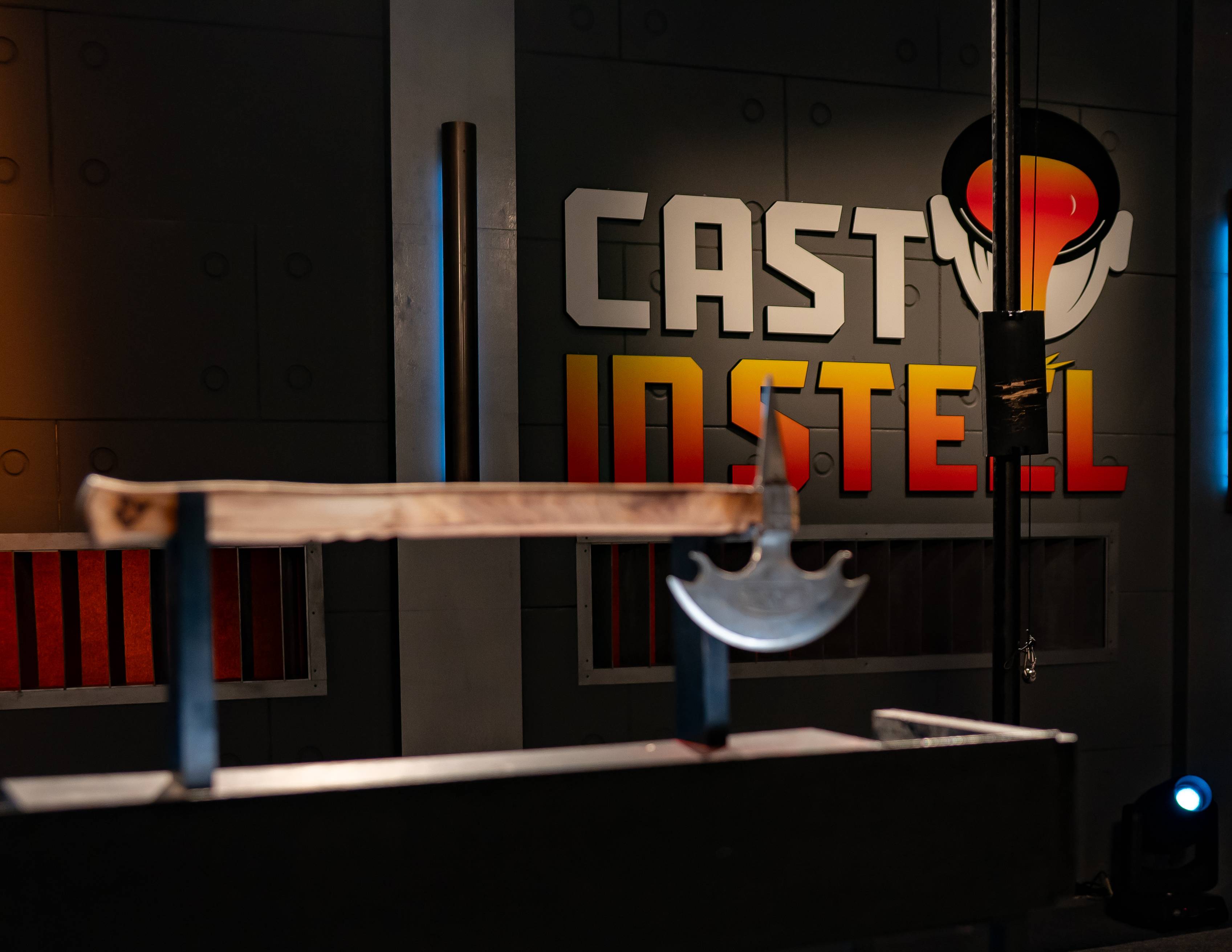
The Bobcat Gussmeisters' axe on the testing stand
Bobcat Gussmeisters' axe at 2026 Cast in Steel

TXST students earned two national honors at the 2026 Cast in Steel competition while gaining hands-on engineering, teamwork, and professional experience. 

At more than 3,100 degrees Fahrenheit, molten steel leaves little room for error. For five Texas State University students, casting it offered an opportunity to turn classroom knowledge, historical research, and teamwork into an award-winning engineering project.

The Bobcat Gussmeisters earned third place in the Best Sand Casting and Best Authentic Horseman Axe categories at the 2026 Cast in Steel competition in Grand Rapids, Michigan. TXST’s participation will be featured in Season 2 of “Cast in Steel,” scheduled to air in 2027.

Team members were:

  • Ace Frankhouser, a bachelor of science in manufacturing engineering technology student
  • George Brown, a bachelor of science in mechanical engineering student
  • Moses Greer, a bachelor of science in mechanical engineering student
  • Elyin Lopez, a bachelor of science in manufacturing engineering technology student
  • Wyatt Lange, a bachelor of science in mechanical engineering student 
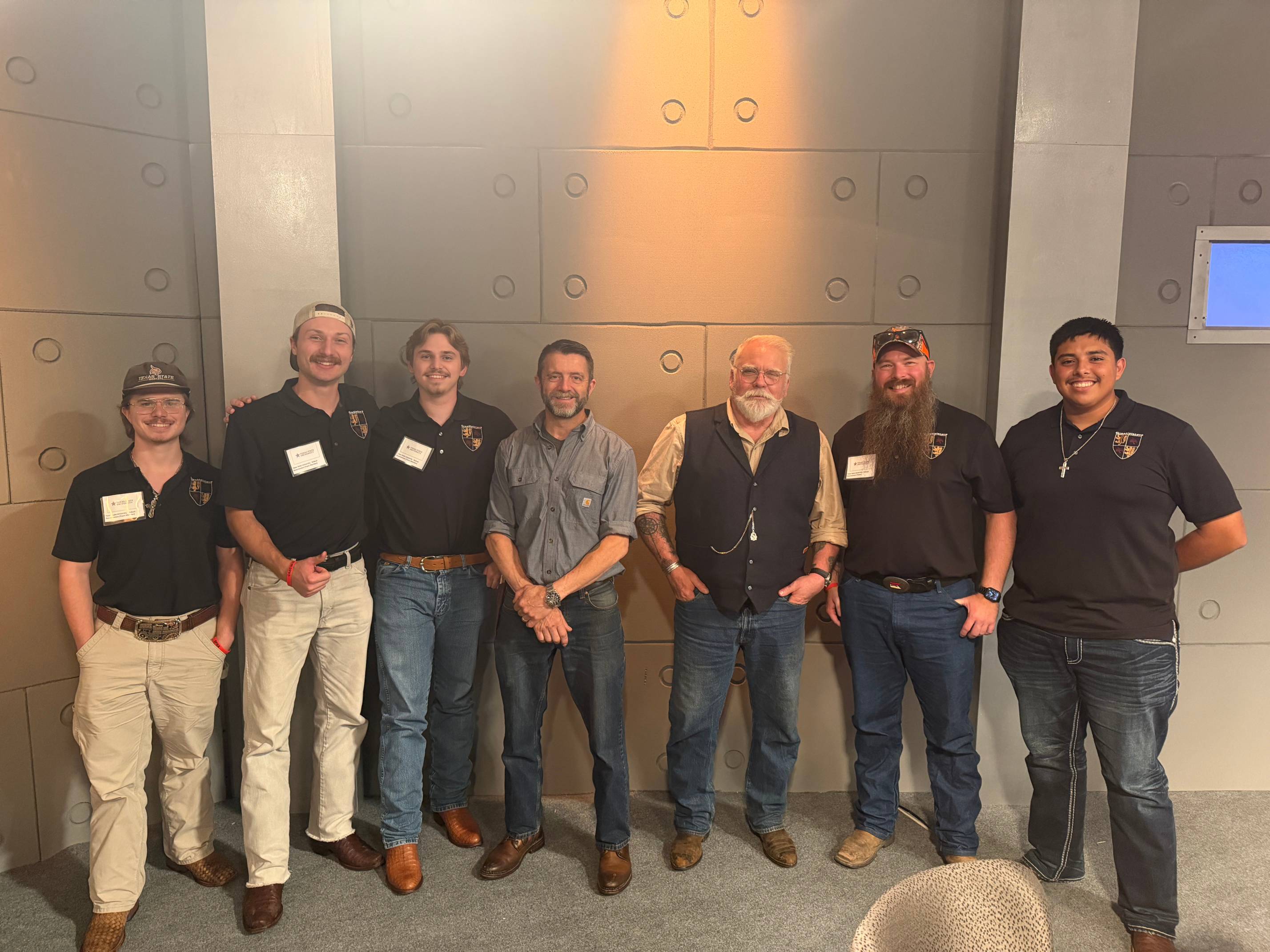
seven men posing for photo

The Bobcat Gussmeisters post-competition with judges Ben Abbott and Dave Baker. These judges also host the TV show Forged in Fire, so this was a special moment for the team.

Hosted by the Steel Founders' Society of America, the competition challenges university teams to design, cast, and test a historically inspired tool or weapon. Entries were judged on performance, authenticity, aesthetics, and manufacturing quality. The team chose the name Bobcat Gussmeisters, which means “Bobcat foundry masters” in German, to reflect the traditional German axes that inspired its design.

“I learned about Cast in Steel through past members of my student organization, American Foundry Society. TXST is lucky enough to have our own student chapter and on-campus foundry facility,” said Frankhouser, the team captain. “I was immediately excited to be part of the competition because it sounded like a fun engineering design challenge.” 

From concept to casting

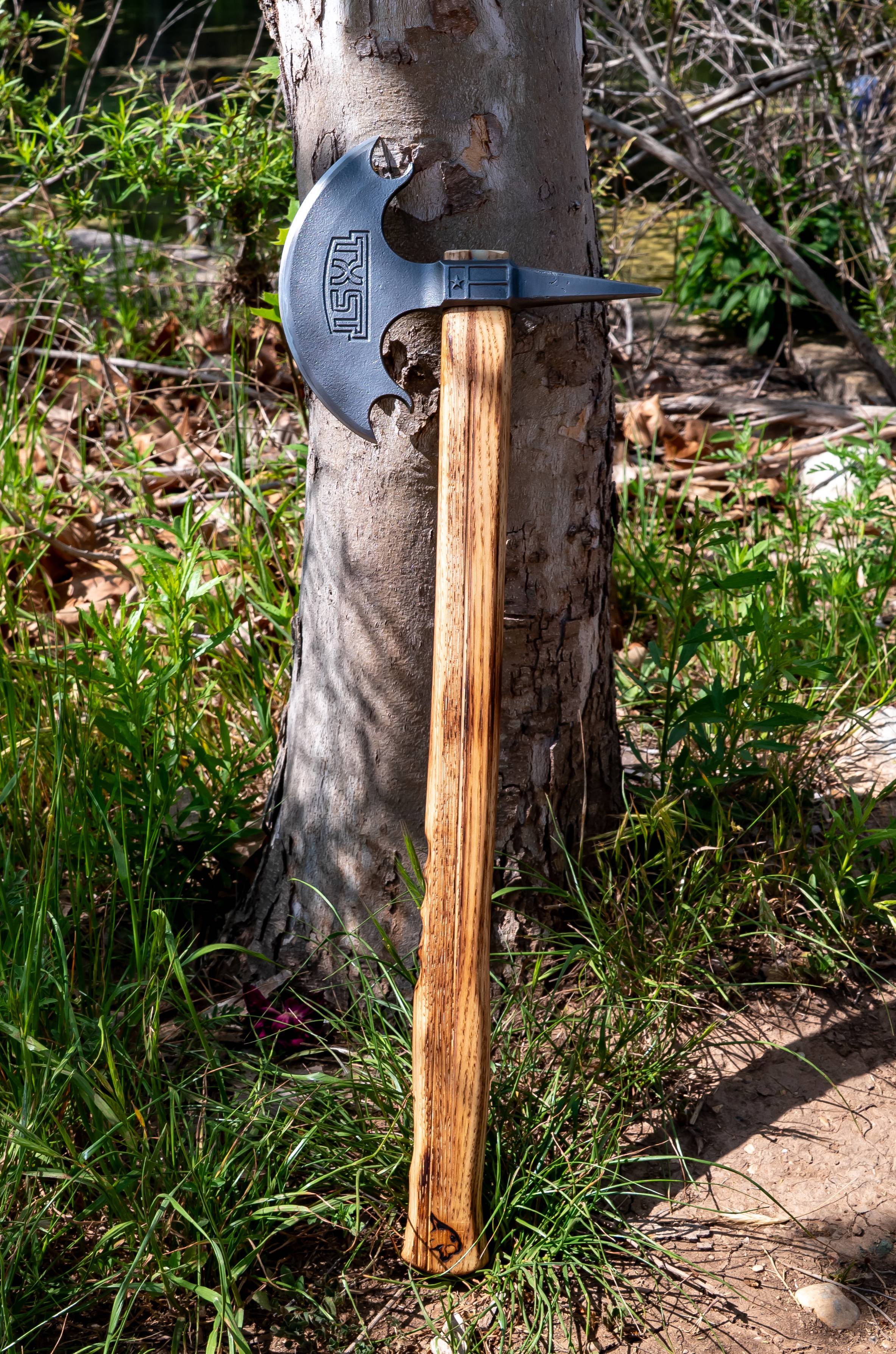
forged steel axe with wooden handle leaning against a tree

The Bobcat Gussmeisters created a horseman’s axe inspired by those used during the 15th and 16th centuries. Frankhouser helped lead the design, casting, material selection, and heat treatment while coordinating responsibilities and access to TXST’s facilities.

Luis Trueba, Ph.D., associate professor in the Department of Engineering Technology and faculty advisor for the American Foundry Society student chapter, helped guide the project.

“This competition allows students to take a loosely defined set of engineering specifications and apply their creativity and engineering knowledge to design and create a finished product,” Trueba said.

Working within the limits of available equipment and processes required the team to develop and test its own solutions. As the competition heated up, the students balanced the project with their coursework, coordinated time with faculty, and refined their casting and heat treatment methods. When early approaches did not work, they consulted experts, adjusted their plans, and tried again.

Trueba said he enjoyed watching the students’ ideas and abilities develop throughout the process.

“They are good at coming up with creative designs and solutions, and they undergo significant professional growth,” Trueba said. “Besides all that, there is something special about casting steel at 3,100 degrees Fahrenheit that excites everyone.” 

Forging professional skills

Trueba advised the team alongside Collin Payne and Corbin Hanzel, who help operate TXST’s foundry facilities. The students also received guidance from Henderson Manufacturing Co., a ferrous metals foundry in Pittsburg, Texas, where Frankhouser interned in summer 2025.

“By being forced to seek industry experts’ guidance, ask questions, and troubleshoot problems, I think each one of the team members learned a lot about what it feels like to be an engineer,” Frankhouser said.

The Best Sand Casting honor held particular significance because the Bobcat Gussmeisters manufactured their axe heads in TXST’s on-campus foundry. Some competing teams designed their entries but relied on industry partners to complete the casting process.

“The fact that we were competitive with other teams that did not necessarily make their axe in-house is something that each of us is extremely proud of,” Frankhouser said.

The Bobcat Gussmeisters' point of view for judging.

The competition allowed the team to apply concepts from their courses while strengthening the collaboration, communication, and problem-solving skills they will need in their careers. Frankhouser plans to become a foundry or manufacturing engineer after graduation.

“Cast in Steel was an amazing team-building experience for all of the members on my team,” Frankhouser said. “We developed extremely useful skills, challenged ourselves and our knowledge, and had a really fun time doing all of it.”

By representing TXST on a national stage, the Bobcat Gussmeisters celebrated Bobcat ingenuity and forged skills they will carry into their engineering careers. 

For more information, contact:

TXST Office of Media Relations, 512-245-2180