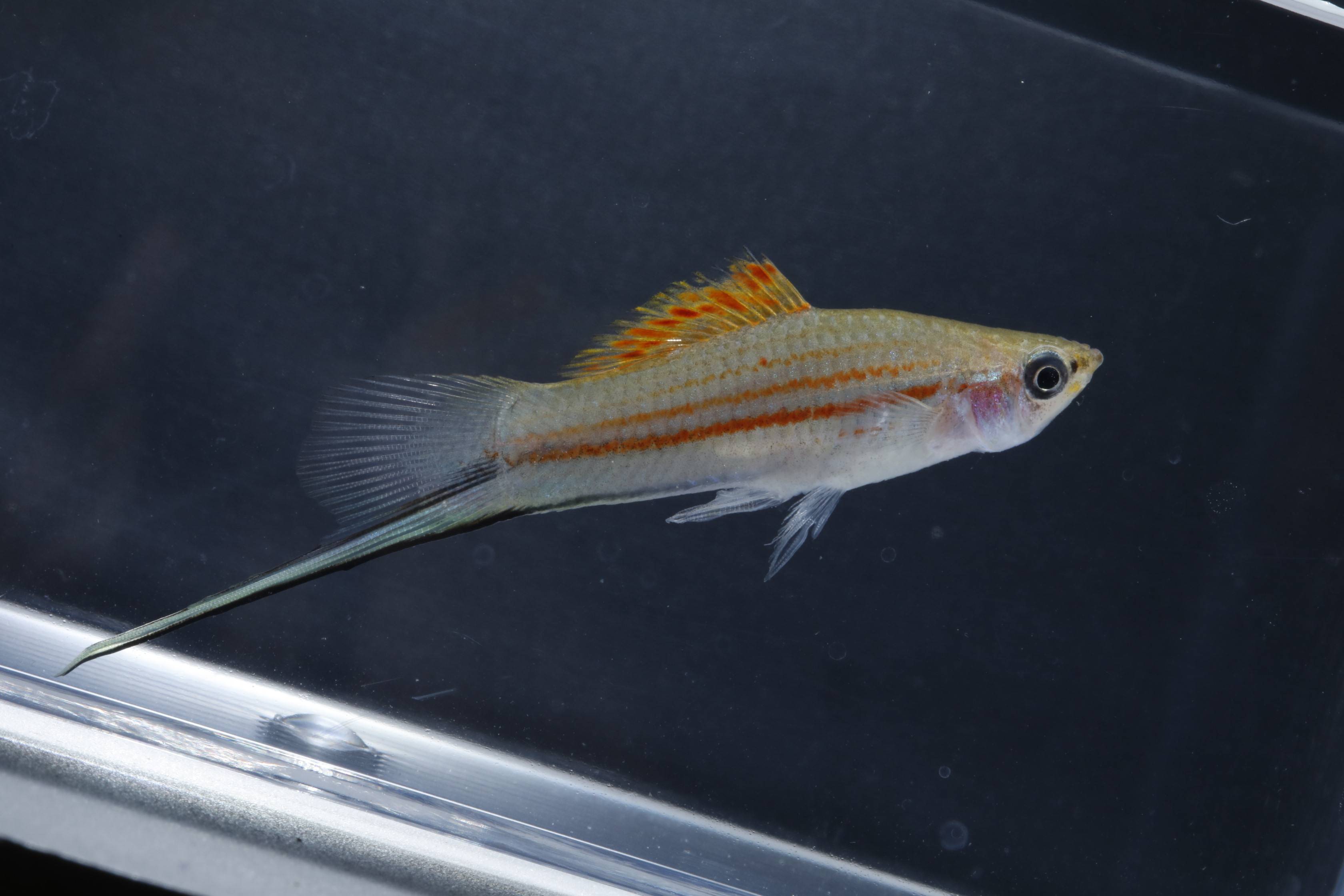
Texas State University geneticists Yuan Lu, Ph.D. and Manfred Schartl, Ph.D. have received a $3 million grant from the National Institutes of Health (NIH) to advance research using Xiphophorus fish to study human disease.
Lu and Schartl will lead the project, “Advancement of the Xiphophorus Model for Studying Disease.” Lu is an assistant professor in the Departments of Chemistry and Biochemistry and Biology and associate director of the Institute for Molecular Life Sciences (IMLS). Schartl is a scholar in residence at IMLS.
This award gives our team resources to continue disease-related research and provide the scientific community with the tools it needs. It will also help us build on collaborations that are strengthening biomedical research at TXST.
Yuan Lu
Associate director of the Institute for Molecular Life Sciences (IMLS)
Xiphophorus are freshwater fish commonly known as platyfish and swordtails. At IMLS, TXST houses 24 of the 26 known Xiphophorus species, along with distinct genetic lines and hybrids. The institute provides fish and research materials to scientists at TXST and around the world.
Natural genetic differences among the Xiphophorus fish can produce traits that resemble human diseases, including cancer, obesity, and neurological and developmental disorders. Yet the fish often remain healthy. By studying that contrast, researchers can pinpoint the biological processes that protect the animals and may offer clues for future disease research.
“Melanoma research has shown the potential of the Xiphophorus model and led to discoveries now used in human melanoma diagnosis and drug development,” Lu said. “With this award, we can build on that success and explore new questions in neurodegenerative and metabolic diseases.”
The grant will make the model easier for other scientists to access and use. The team will standardize information about the fish, their genes and their traits, link the data to public research platforms, and develop laboratory-grown cell models and genetic tools that help scientists study specific genes in cells and living fish.
Manfred Schartl
Lu and Schartl will work with collaborators at the University of Missouri, UT Health San Antonio, the University of North Carolina at Chapel Hill, and Lawrence Berkeley National Laboratory to connect findings from Xiphophorus to broader studies of human disease. The partnerships could also help IMLS with research on other animal models that offer clues about human disease, including blind cavefish, axolotls, sticklebacks, and naked mole rats.
The project will also give TXST undergraduate and graduate students opportunities to conduct lab-based and computational research. Students will gain hands-on experience studying genes and cells, analyzing biological data, and helping produce scholarly publications.
“Nature has already given us powerful clues about disease resilience,” Lu said. “By learning how these fish remain healthy despite traits that resemble human disease, we can open new paths for research and discovery.”